ou fully charge your portable power station, switch it off, and put it away. A few weeks later, you turn it back on only to discover the battery has dropped from 100% to 95% or even lower. It’s a common experience that leaves many owners wondering if something is wrong.
The good news is that a portable power station losing battery when it’s turned off is usually normal. Like smartphones, laptops, and electric vehicles, portable power stations slowly lose charge over time due to battery chemistry and internal electronics. However, excessive battery drain can also indicate incorrect storage, high temperatures, or even a hardware issue.
In this guide, you’ll learn why this happens, how much battery loss is considered normal, and what you can do to maximize your battery’s lifespan.
Quick Answer
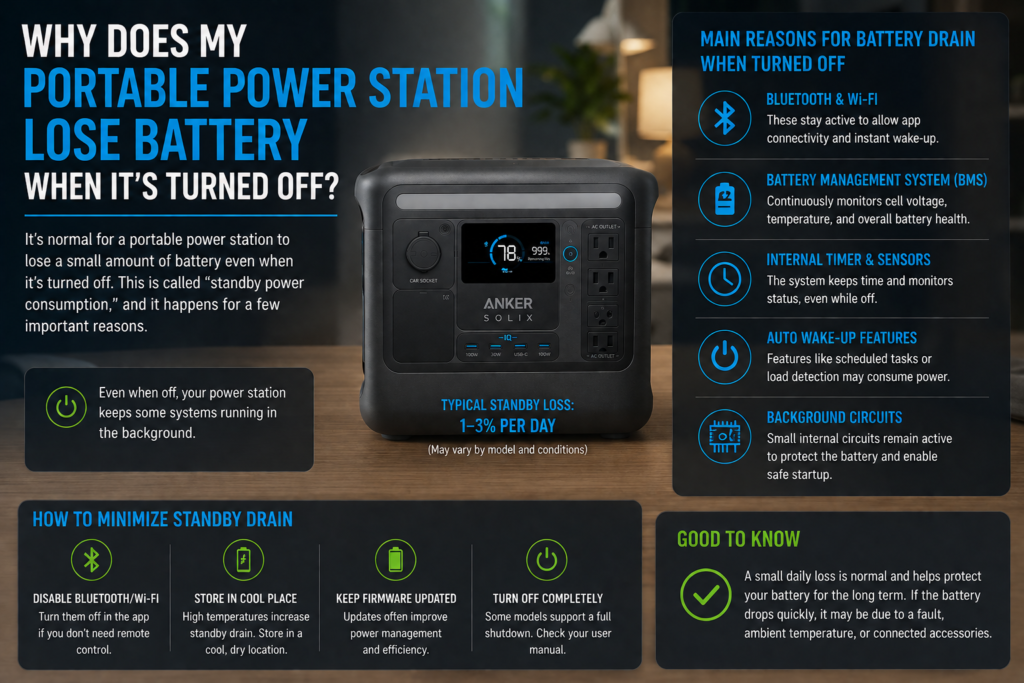
Most portable power stations lose a small amount of battery charge even when turned off. This is caused by natural battery self-discharge and the battery management system (BMS), which continues to consume a tiny amount of power while monitoring the battery.
For most modern lithium power stations, losing 2% to 5% over a month is generally considered normal. For example, some users report their unit drops from 100% to around 95% after 30 days of storage, which falls within expected behavior.
Why Does a Portable Power Station Lose Battery When It’s Turned Off?
Several factors contribute to battery drain, even when the power station isn’t actively powering anything.
1. Battery Self-Discharge
Every rechargeable battery slowly loses energy over time.
This natural process is called self-discharge, and it affects every battery chemistry, including:
- Lithium Iron Phosphate (LiFePO₄)
- Lithium-ion
- Nickel-metal hydride
- Lead-acid
Fortunately, LiFePO₄ batteries have one of the lowest self-discharge rates, making them ideal for emergency backup power.
2. The Battery Management System (BMS)
Even after switching the power station off, the Battery Management System remains partially active.
The BMS continuously monitors:
- Cell voltage
- Temperature
- Battery balance
- Safety protection
- Charging status
Although the electricity used is extremely small, it slowly reduces the battery percentage over time.
Without the BMS, modern lithium batteries would not be nearly as safe or long-lasting.
3. Display and Internal Electronics
Many portable power stations never completely “shut down.”
Instead, certain electronic components remain in a low-power standby mode.
These may include:
- Memory chips
- Internal clock
- Wireless modules
- Power monitoring circuits
- Battery sensors
Each component draws only a tiny amount of power, but together they contribute to gradual battery loss.
4. Temperature
Heat accelerates every chemical reaction inside a battery.
If you store your power station in:
- A hot garage
- A vehicle
- Direct sunlight
- An attic
you’ll likely notice faster battery loss.
On the other hand, extremely cold temperatures temporarily reduce battery performance, although much of the capacity returns once the battery warms back up.
How Much Battery Loss Is Normal?
Battery drain varies by manufacturer and storage conditions.
As a general guideline:
| Storage Time | Typical Battery Loss |
|---|---|
| 1 week | 0–2% |
| 1 month | 2–5% |
| 3 months | 5–10% |
| 6 months | 10–20% (varies) |
A small percentage drop over several weeks is usually nothing to worry about.
However, if your battery falls from 100% to 60% in just a few days while switched off, that’s not normal and deserves further investigation.
When Should You Be Concerned?
A little battery drain is expected.
You should contact the manufacturer if you notice:
- Battery loses more than 10–15% within a few days.
- The battery drains completely during short-term storage.
- The power station becomes warm while turned off.
- Battery percentage changes dramatically after every restart.
- The unit refuses to charge afterward.
These symptoms could indicate:
- A faulty battery pack
- Damaged electronics
- A defective BMS
- Firmware problems
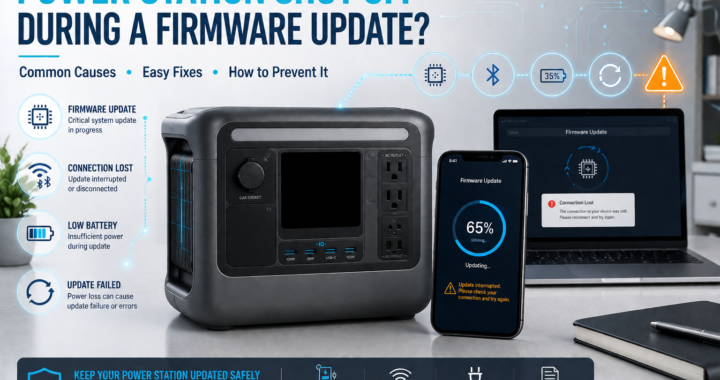
If your unit has recently received a firmware update, you may also find our guide on Why Does My Portable Power Station Turn Off During a Firmware Update? helpful.
How to Reduce Battery Drain During Storage
Fortunately, there are several simple ways to keep your battery healthy.
Store at the Recommended Charge Level
Most manufacturers recommend storing lithium batteries between 40% and 80% charge.
Keeping the battery at 100% for months can increase long-term battery stress.
Likewise, storing it completely empty may allow the voltage to drop too low.
Keep It Cool
Temperature has one of the biggest effects on battery aging.
Store the power station in a:
- Dry location
- Cool room
- Well-ventilated area
Avoid exposing it to prolonged temperatures above 30°C (86°F).
Recharge Every Few Months
Even if you never use the power station, check the battery every three to six months.
Recharge it if necessary.
This simple habit helps prevent deep discharge, which can permanently damage lithium batteries.
Keep Firmware Updated
Manufacturers occasionally release firmware updates that improve battery management and standby power consumption.
Installing these updates may improve efficiency and resolve unexpected battery behavior.
Does Battery Drain Mean the Battery Is Wearing Out?
Not necessarily.
A small amount of standby battery loss does not mean the battery is failing.
Battery aging is influenced much more by:
- High temperatures
- Frequent deep discharges
- Constant fast charging
- Heavy continuous loads
- High cycle count
Modern LiFePO₄ batteries are commonly rated for 3,000 to 6,000 charge cycles, allowing years of regular use before noticeable capacity loss.
Can Pass-Through Charging Prevent Battery Loss?
Some users leave their power station plugged into the wall continuously.
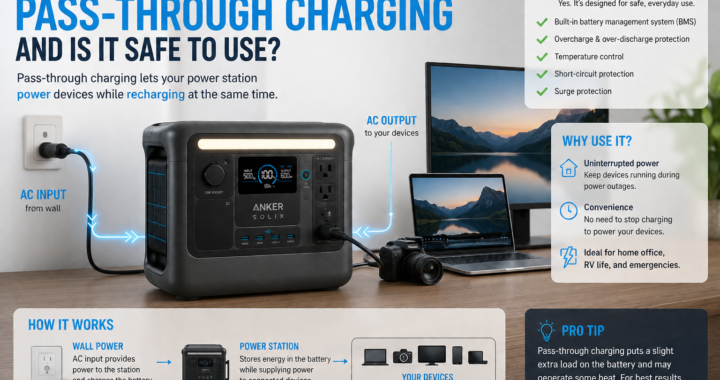
Many premium models support pass-through charging, allowing them to power connected devices while maintaining the battery.
This can be useful for:
- Home internet equipment
- CPAP machines
- Security systems
- Emergency backup setups
However, always confirm that your specific model is designed for continuous pass-through operation before leaving it plugged in indefinitely.
Common Myths About Battery Drain
Myth: A Turned-Off Power Station Should Never Lose Battery
False.
Every rechargeable battery slowly loses energy, even when not in use.
Myth: Losing 5% Means the Battery Is Bad
False.
A small monthly battery drop is considered normal for most lithium batteries.
Myth: You Should Always Store It Fully Charged
Not always.
Manufacturers generally recommend storing lithium batteries around the middle of their charge range rather than at 100%.
Frequently Asked Questions
Why does my portable power station lose battery when it’s turned off?
The most common causes are natural battery self-discharge and the battery management system, which continues to consume a tiny amount of power even when the unit is switched off.
Is it normal for a portable power station to lose 5% in a month?
Yes. For many lithium-based portable power stations, a 2% to 5% monthly battery loss is considered normal under proper storage conditions.
Can cold weather cause battery loss?
Cold temperatures temporarily reduce available battery capacity, while hot temperatures increase long-term battery degradation and self-discharge.
Should I leave my power station plugged in all the time?
Only if the manufacturer specifically supports continuous charging or pass-through operation. Always follow the recommendations in your owner’s manual.
How often should I recharge a stored portable power station?
Most manufacturers recommend checking the battery every three to six months and recharging it if necessary to prevent deep discharge.
Final Verdict
If your portable power station loses battery when it’s turned off, there’s usually no reason to panic. A small amount of battery drain is a normal characteristic of lithium batteries and the built-in Battery Management System that protects them.
In most cases, losing 2% to 5% of charge over a month is well within the expected range. By storing your power station in a cool, dry place, keeping the battery between 40% and 80% for long-term storage, and checking it every few months, you can significantly extend its lifespan.
If you notice unusually rapid battery loss, overheating, or charging problems, it’s worth updating the firmware, reviewing the manufacturer’s recommendations, or contacting customer support. With proper care, a quality portable power station should provide reliable backup power for many years.