

Buying a portable power station isn’t as simple as choosing the biggest battery or the lowest price. With dozens of models available, it’s easy to end up with a unit that’s either too small for your needs or packed with features you’ll never use. A well-planned portable power station buying checklist helps you focus on what truly matters, from battery capacity and inverter power to charging speed and long-term reliability.
In this guide, we’ll walk through the essential factors every buyer should consider before making a purchase. Whether you’re preparing for home backup, camping, RV travel, or emergency preparedness, this checklist will help you choose the right portable power station with confidence.
Quick Buying Checklist
Before buying any portable power station, make sure you can answer yes to most of these questions:
- ✅ Is the battery capacity large enough for my needs?
- ✅ Does the inverter provide enough continuous power?
- ✅ Does it use a LiFePO₄ battery?
- ✅ Can it recharge quickly from AC power?
- ✅ Does it support solar charging?
- ✅ Is the weight manageable?
- ✅ Does it have enough AC, USB, and DC ports?
- ✅ Is the warranty at least 3–5 years?
- ✅ Is there a reliable mobile app?
- ✅ Does it fit within my budget?
If not, keep shopping.
Why a Buying Checklist Matters
Portable power stations can cost anywhere from a few hundred dollars to several thousand. Buying the wrong one may leave you with limited runtime, insufficient power for your appliances, or unnecessary features that increase the price.
A simple checklist helps you compare models objectively instead of relying on marketing claims.
1. Choose the Right Battery Capacity
Battery capacity is measured in watt-hours (Wh) and determines how long your devices can run.
General recommendations:
- 300–600Wh – Phones, tablets, lights
- 700–1000Wh – Laptops, TVs, routers
- 1000–1500Wh – Refrigerators and home backup
- 2000Wh+ – Extended outages and multiple appliances
For most homeowners, 1000Wh to 2000Wh offers the best balance between runtime and portability.
2. Check the Inverter Power
Many buyers focus only on battery size and forget about inverter output.
Look for:
- Minimum 1800W continuous output
- Pure sine wave inverter
- High surge rating for starting motors
A powerful inverter allows you to run appliances like refrigerators, microwaves, coffee makers, and power tools safely.
3. Make Sure It Uses a LiFePO₄ Battery
Battery chemistry has a major impact on lifespan and safety.
LiFePO₄ batteries offer:
- Longer lifespan
- Better thermal stability
- Improved safety
- Thousands of charge cycles
- Lower long-term ownership costs
Nearly all premium portable power stations now use LiFePO₄ technology.
4. Compare Charging Speed
Fast charging is especially valuable during emergencies.
Look for models that offer:
- AC charging in under 90 minutes
- Solar charging compatibility
- Car charging support
- Intelligent battery management
A faster recharge means your power station is ready sooner if another outage occurs.
5. Consider Solar Compatibility
If you plan to use your power station off-grid or during extended blackouts, solar charging is essential.
Check:
- Maximum solar input
- MPPT charge controller
- Compatible solar connectors
- Expandable solar options
Higher solar input allows the battery to recharge more quickly on sunny days.
6. Think About Portability
Larger batteries provide longer runtime but also add weight.
Ask yourself:
- Will I carry it upstairs?
- Will it stay in one room?
- Will I take it camping?
- Will I transport it in my vehicle?
Sometimes a lighter 1000Wh model is more practical than a heavier 2000Wh unit.
7. Count the Available Ports
Different users need different outputs.
Look for enough:
- AC outlets
- USB-A ports
- USB-C PD ports
- 12V DC ports
- Car socket
- Anderson or XT60 solar input
Having multiple output options increases flexibility during emergencies.
8. Check Expandability
Some power stations allow additional batteries.
Expansion is useful if you expect:
- Longer power outages
- Future energy needs
- Home backup upgrades
If expansion matters, confirm that extra batteries are available before purchasing.
9. Review the Mobile App
Many premium brands include smartphone apps that let you:
- Monitor battery percentage
- Adjust charging speed
- Update firmware
- Control outputs remotely
- Schedule charging
A polished app can greatly improve the overall ownership experience.
10. Compare Warranty and Brand Reputation
A good warranty often reflects manufacturer confidence.
Look for:
- Minimum 3-year warranty
- Responsive customer support
- Positive long-term customer feedback
- Available replacement parts
Buying from a trusted brand usually provides greater peace of mind.
Our Recommended Portable Power Stations
Best Overall
EcoFlow DELTA 3 Classic
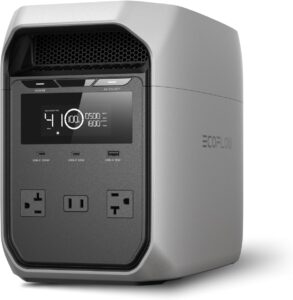
Excellent combination of fast charging, smart features, UPS capability, and portability.
Learn more in our EcoFlow DELTA 3 Classic Review After Real Customer Feedback.
Best Value
BLUETTI AC180
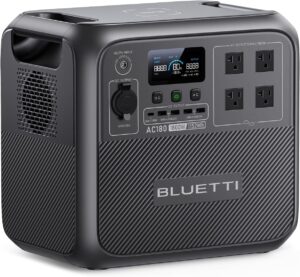
Reliable performance, excellent inverter, and one of the best values available.
Read our Bluetti AC180 Review: Honest Analysis of Performance and Real-World Value.
Best Budget
EcoFlow DELTA 2
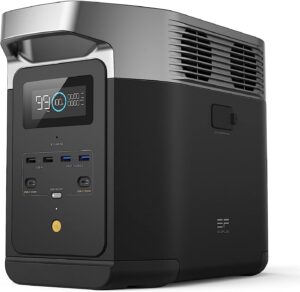
A proven performer with expandable capacity and excellent charging speed.
See our ECOFLOW DELTA 2 Review: Honest Analysis Based on Expert Testing and Real-World Feedback.
Best Smart Features
Anker SOLIX C1000 Gen 2
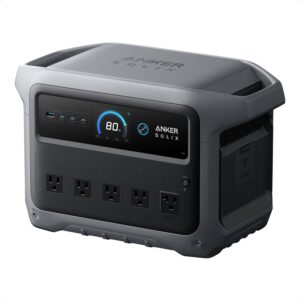
Outstanding companion app, UPS mode, and compact design.
Read our Anker SOLIX C1000 Gen 2 Review: Is It Worth Buying in 2026?
Best Lightweight Option
Jackery Explorer 1000 v2
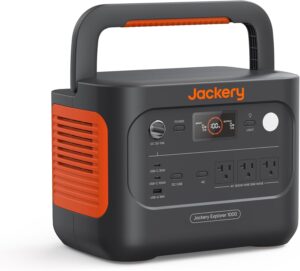
Easy to carry while still providing enough power for essential household devices.
See our Jackery Explorer 1000 v2 Review: Is It Worth Buying in 2026?
Best for Extended Backup
BLUETTI Elite 200 V2
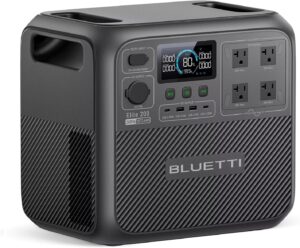
Ideal for longer outages thanks to its large battery capacity.
Read our BLUETTI Elite 200 V2 Review: Is It Worth Buying in 2026?
Common Buying Mistakes
Avoid these common mistakes:
- Choosing the cheapest model instead of the right one
- Ignoring inverter wattage
- Buying more capacity than you’ll actually use
- Overlooking charging speed
- Skipping warranty comparisons
- Ignoring portability
- Not checking solar compatibility
A few minutes of research can prevent years of frustration.
Frequently Asked Questions
What is the most important item on a portable power station buying checklist?
Battery capacity and inverter power are the two most important factors because they determine what you can run and for how long.
Should I buy a LiFePO₄ portable power station?
Yes. LiFePO₄ batteries offer longer lifespan, better safety, and significantly more charge cycles than older lithium-ion batteries.
Is 1000Wh enough for home backup?
For many households, yes. A 1000Wh unit can power essentials like a refrigerator, router, lights, and charge phones during short outages.
How much inverter power do I need?
An inverter rated at 1800W or higher is suitable for most common household appliances.
Is solar charging worth it?
Absolutely. Solar panels allow you to recharge during extended outages and reduce dependence on the electrical grid.
Which portable power station is best overall?
For most users, the EcoFlow DELTA 3 Classic provides the best combination of power, charging speed, portability, and smart features.
Final Verdict
Using a portable power station buying checklist makes it much easier to compare models and avoid expensive mistakes. Instead of focusing only on battery size, consider inverter power, charging speed, battery chemistry, portability, warranty, and solar compatibility.
Whether you’re shopping for emergency home backup, camping, RV travel, or off-grid living, choosing the right portable power station today will give you reliable power when you need it most.


