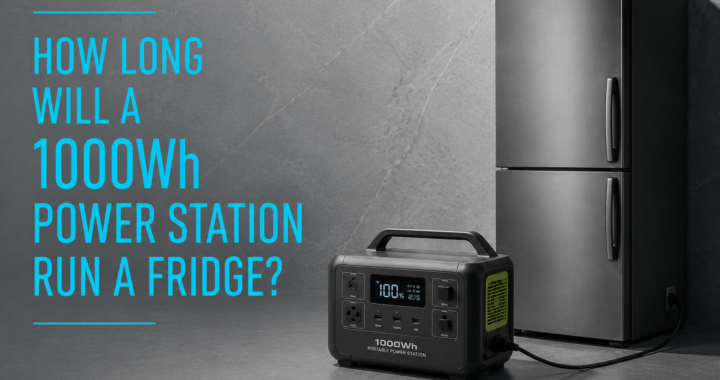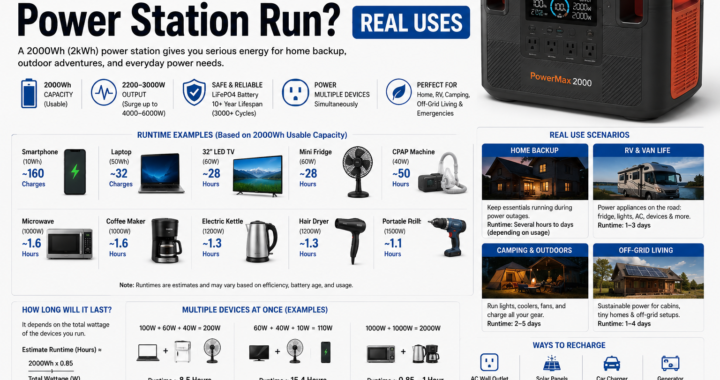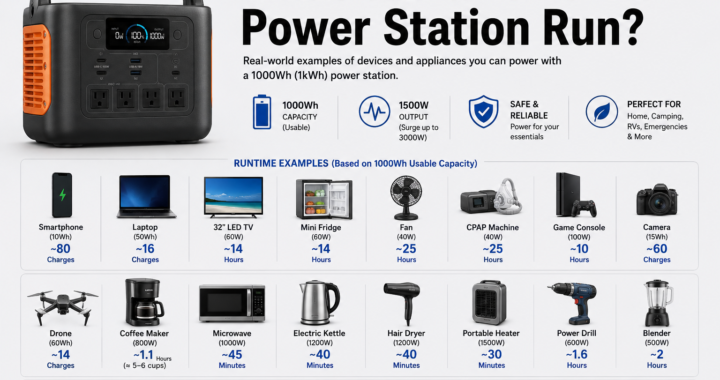
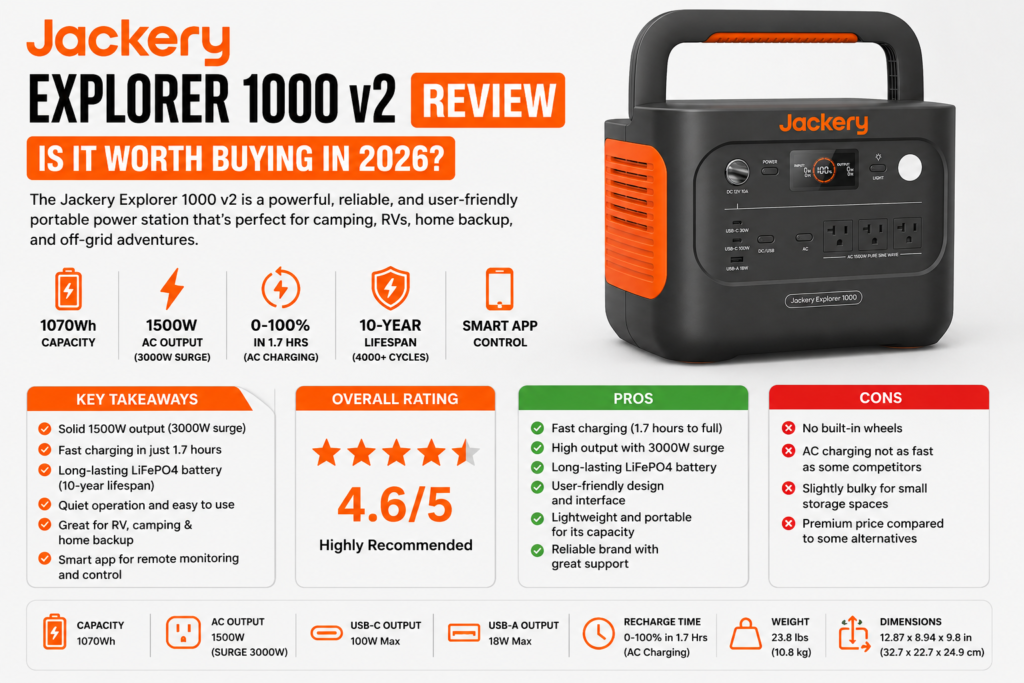
This Jackery Explorer 1000 v2 Review examines one of the most popular portable power stations for home backup, camping, RV travel, and emergency preparedness. According to the official specifications, it features a 1,070Wh LiFePO4 battery, a 1,500W pure sine wave inverter, and up to 3,000W surge capability.
Buyers are drawn to the Explorer 1000 v2 because it combines long battery life, fast charging, solar compatibility, and a relatively compact design. Real-world users frequently rely on it during power outages, camping trips, van life adventures, and off-grid work situations.
Based on official specifications and customer experiences, the Jackery Explorer 1000 v2 delivers strong overall performance for most everyday power needs. However, some limitations become apparent when using high-surge appliances or relying heavily on app-based features.
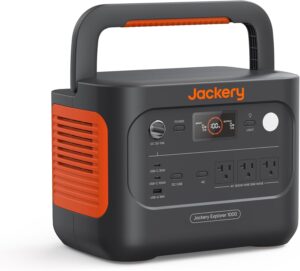
Jackery Explorer 1000 v2 Specifications Breakdown
| Specification | Details |
|---|---|
| Battery Capacity | 1,070Wh (30.4Ah/35.2V) |
| Inverter Output | 1,500W Continuous |
| Surge Power | 3,000W Peak |
| Battery Chemistry | LiFePO4 (LFP) |
| Cycle Life | 4,000 Cycles to 70% Capacity |
| AC Charging Speed | 1 Hour (Emergency Super Charge Mode) |
| Solar Input Capacity | Up to 400W |
| Solar Charging Time | Approximately 3 Hours with 2 × 200W Panels |
| Expandability | Not Expandable |
| Weight | 23.8 lbs (10.8 kg) |
| Dimensions | 12.87 × 8.82 × 9.72 inches |
| Output Ports | 3 AC, 2 USB-C, 1 USB-A, 1 Car Port |
| Connectivity | Bluetooth and Wi-Fi |
| Warranty | 3 Years + 2 Years Extended |
The 1,070Wh battery provides substantial energy storage for common household devices and outdoor equipment. Additionally, the LiFePO4 battery chemistry offers longer service life than older lithium battery technologies.
The 1,500W inverter supports many appliances, electronics, and tools. Meanwhile, the 3,000W surge capability helps handle temporary startup demands from compatible devices.
Another standout specification is charging speed. The Explorer 1000 v2 can recharge in as little as one hour when Emergency Super Charge Mode is enabled through the app.
For solar users, the 400W input capacity allows significantly faster off-grid charging than many portable power stations in this size class.
Our First Impressions of the Jackery Explorer 1000 v2
Based on official specifications, the Explorer 1000 v2 aims to balance portability with practical power output.
The compact footprint makes storage easy in RVs, vehicles, garages, and emergency supply areas. At 23.8 pounds, it remains portable for most users while still offering over 1,000Wh of battery capacity.
The front panel includes a straightforward selection of AC, USB-C, USB-A, and vehicle charging ports. Additionally, Bluetooth and Wi-Fi connectivity allow users to monitor battery status and adjust settings remotely.
Buyers consistently report that the unit feels well built and easy to operate. Many customers specifically purchased it for emergency backup because of its fast charging speed and long-life LiFePO4 battery.
However, expectations sometimes exceeded reality when users attempted to run large air compressors, heavy-duty vacuum cleaners, or power-hungry saws.
Performance and Real-World Usage of the Jackery Explorer 1000 v2
Jackery Explorer 1000 v2 Review Performance Results
Real-world feedback suggests the Explorer 1000 v2 performs best when powering moderate household loads and outdoor equipment.
Multiple users report successfully running:
- Refrigerators
- Freezers
- CPAP machines
- Portable fridges
- Starlink systems
- Laptops
- Routers
- Phones and tablets
- Lights and fans
- Tool battery chargers
Emergency home backup was the most common use case mentioned by customers. Users frequently powered refrigerators, communication equipment, and essential electronics during outages.
Camping and RV travel represented another major application. Many owners relied on the power station to operate portable refrigerators, heated blankets, lighting systems, and mobile internet equipment.
Real-world feedback suggests that charging performance is generally impressive. Several customers praised both wall charging and solar charging capabilities.
However, some users reported slower-than-expected charging speeds initially. In several cases, a complete discharge and recharge cycle appeared to restore expected charging performance.
Users also found that wall charging remained significantly faster and more reliable than vehicle charging.
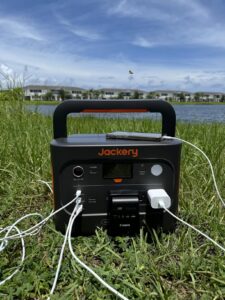
Real-World Problems and Life-Usage Insights
Battery Drain and Efficiency Concerns
Several users noticed battery capacity decreasing more quickly than expected when AC output remained active without powering devices.
The practical impact is reduced runtime during emergencies and camping trips.
Many owners solved this issue by:
- Turning off AC output when unused
- Using DC-powered devices whenever possible
- Monitoring power usage through the app
Connectivity and App Challenges
Some customers experienced difficulties with:
- Wi-Fi setup
- Bluetooth disconnections
- Slow app responsiveness
- Account login requirements
- App-dependent settings
Several users reported that Bluetooth monitoring worked more reliably than Wi-Fi when connection issues occurred.
Accessory and Compatibility Issues
One of the most frequently reported complaints involved missing accessories.
Users discovered that:
- Solar charging cables may require separate purchase
- Vehicle charging cables may require separate purchase
- Certain solar panels need adapters
- Older charging equipment may require compatibility adapters
Many experienced owners recommend purchasing all necessary cables before an emergency occurs.
Reliability and Service Experiences
A minority of users reported:
- Dead-on-arrival units
- F6 charging errors
- Unexpected failures within months
- Slow warranty processing
Despite these issues, many affected customers eventually received repairs or replacement units through warranty support.
Assessing the Noise Levels
According to user reviews, noise levels depend largely on charging speed and power demand.
Under lighter loads, many users found the power station comfortable for indoor operation.
When charging rapidly or supporting heavier loads, the cooling fans become more noticeable.
Several customers specifically recommend:
- Using Quiet Mode overnight
- Reducing charging speed when silence is important
- Positioning the unit away from sleeping areas
According to user reviews, Quiet Mode significantly improves comfort during overnight use with refrigerators, CPAP machines, and fans.
What We Liked About the Jackery Explorer 1000 v2
- 1,070Wh battery capacity – supports long backup times for essential devices
- LiFePO4 battery technology – rated for 4,000 charge cycles and a 10+ year lifespan
- 1-hour emergency charging – dramatically reduces downtime
- 1,500W inverter output – powers a wide variety of household devices
- 3,000W surge capability – supports many startup loads
- 400W solar input – practical for off-grid charging
- Compact design – easy to transport and store
- 5-year warranty coverage – adds long-term ownership confidence
- Strong customer satisfaction – reflected by thousands of positive reviews
What We Didn’t Like About the Jackery Explorer 1000 v2
- Idle power consumption – AC mode can drain battery when left enabled
- Fan noise under load – noticeable during heavy operation
- Not expandable – no support for additional battery modules
- Missing accessories – solar and vehicle charging cables may need separate purchase
- Connectivity issues – some users experienced Wi-Fi and Bluetooth problems
- App dependency – certain settings require app access
- High-surge appliance limitations – some tools exceed practical startup capability
- Heavy for hiking – portability is good, but not ideal for backpacking
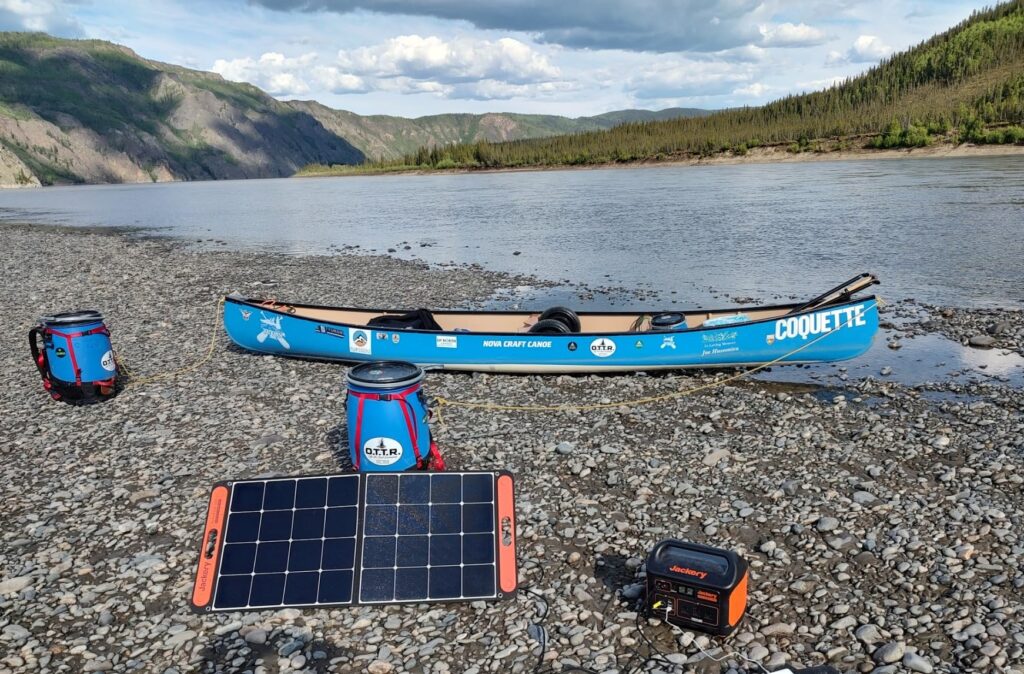
Our Final Verdict: Should You Buy the Jackery Explorer 1000 v2?
The Jackery Explorer 1000 v2 succeeds because it combines a long-lasting LiFePO4 battery, fast charging performance, solar compatibility, and practical portability.
Real-world users consistently report success during power outages, camping trips, RV travel, van life, and CPAP backup applications. The combination of a 1,070Wh battery and 1,500W inverter covers many common power needs.
The unit is not perfect. Some owners experienced connectivity issues, battery drain when AC mode remained active, and compatibility concerns with accessories. Additionally, heavy-duty tools may exceed its practical limits.
Even so, customer satisfaction remains extremely strong overall.
- Overall Rating: 9.1 / 10
- Best For: Home backup, camping, RV travel, van life, CPAP users, and emergency preparedness
- Not Ideal For: Heavy industrial equipment, expandable energy storage needs, and long-distance backpacking
- Value Verdict: The Explorer 1000 v2 offers an excellent balance of battery longevity, charging speed, portability, and real-world usability for most consumers.
“If the Jackery Explorer 1000 v2 matches your power needs, it’s one of the most capable options currently available. Check today’s price and bundle offers to see if it’s the right fit.”
Frequently Asked Questions
How long can the Jackery Explorer 1000 v2 run a refrigerator?
Runtime varies by refrigerator size and power consumption. Multiple users successfully operated refrigerators during outages, but actual runtime depends on wattage draw and usage patterns.
Can the Jackery Explorer 1000 v2 power a CPAP machine?
Yes. Several users reported successful overnight operation. Some customers achieved significantly longer runtimes by using DC adapters instead of AC power.
How fast does the Jackery Explorer 1000 v2 recharge?
According to official specifications, Emergency Super Charge Mode can recharge the unit in approximately one hour when activated through the app.
Can the Explorer 1000 v2 charge with solar panels?
Yes. The unit supports up to 400W of solar input and can recharge in approximately three hours when paired with two 200W solar panels under suitable conditions.
Is the Jackery Explorer 1000 v2 noisy?
According to user reviews, fan noise remains reasonable during normal operation but becomes more noticeable during rapid charging and heavier loads.
Can it run power tools?
Many moderate tools work successfully. However, multiple users report that some large air compressors, vacuum cleaners, and miter saws exceeded the unit’s startup capability.
How long will the battery last?
The manufacturer rates the LiFePO4 battery for 4,000 charge cycles while retaining at least 70% capacity, which corresponds to a lifespan of more than 10 years under normal use.
Does it support battery expansion?
No. Based on the official specifications and user feedback, the Jackery Explorer 1000 v2 does not support external expansion batteries.