
When the lights go out at night, everything suddenly feels uncertain. The fridge hums quieter, the Wi-Fi drops, and the house becomes uncomfortable and still. In that moment, many people ask the same urgent question: what can a 2000Wh power station run?
Because it’s not just about watts or numbers—it’s about keeping food from spoiling, staying connected, and maintaining a sense of normal life during a blackout or off-grid trip. A 2000Wh power station promises serious backup power, but knowing exactly what it can handle makes the difference between confidence and frustration.
In this article, you’ll learn exactly what a 2000Wh power station can realistically run, how long it lasts, and how to use it effectively in real life.
Quick Answer: What can a 2000Wh power station run?
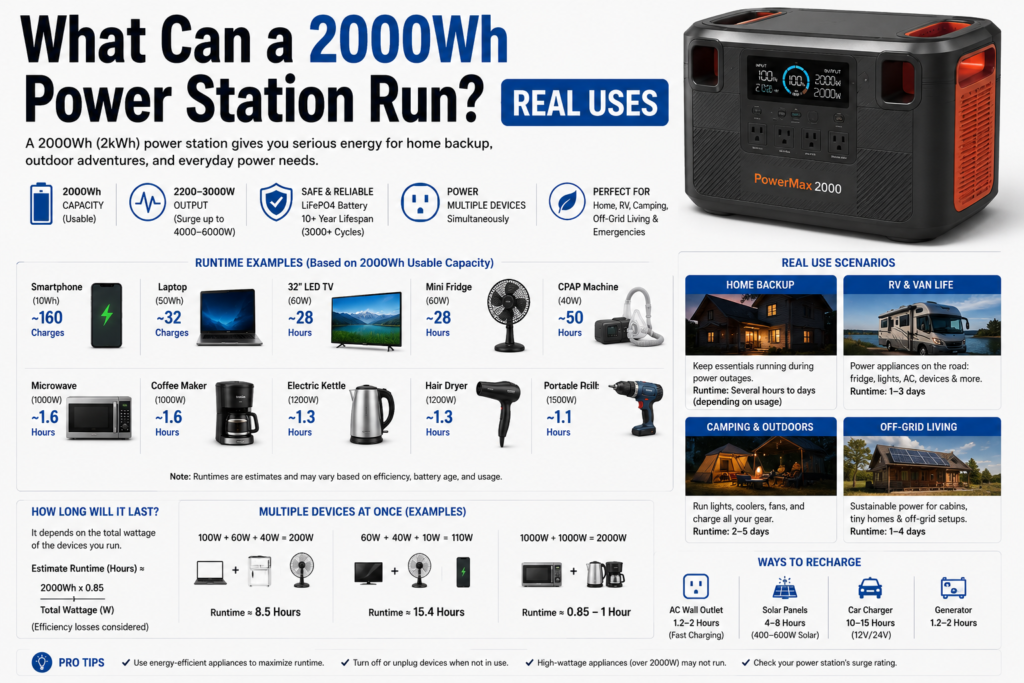
A 2000Wh power station can run most essential household and outdoor appliances, including refrigerators, laptops, routers, lights, CPAP machines, and even some kitchen appliances like microwaves and coffee makers.
In simple terms, it can:
- Keep a fridge running for many hours or even over a day (depending on efficiency)
- Power essential home devices during outages
- Support camping, RV, and van life energy needs
- Run moderate-power tools and electronics
However, it cannot sustainably run high-demand appliances like large space heaters, central air conditioners, or heavy industrial tools for long periods.
Why This Matters in Real Life
A power outage doesn’t just stop your devices—it disrupts your entire routine. Food spoilage, communication loss, and heating or cooling issues can quickly turn stressful.
Therefore, understanding what can a 2000Wh power station run helps you prepare realistically. You know what stays on, what gets prioritized, and what needs to be avoided.
In addition, for travelers, campers, and van lifers, this capacity often represents the difference between roughing it and living comfortably off-grid.
How a 2000Wh Power Station Solves This Problem
A 2000Wh battery stores enough energy to handle multiple essential loads before needing a recharge.
For example, when paired with a unit like the Bluetti Elite 200 V2 , users typically rely on:
- High-capacity lithium battery storage for extended runtime
- 2000W+ inverter output for running appliances simultaneously
- Smart app controls to manage power distribution
Because of this, you can safely run a mix of:
- Refrigerator + Wi-Fi router + lights
- Laptop + phone charging + small appliances
- Medical devices like CPAP machines overnight
Meanwhile, energy-efficient usage (especially DC outputs) extends runtime significantly.
Common Problems Users Mentioned and How This Helps
Heavy to carry during transport
A 2000Wh unit is powerful but heavy. However, users solved this by using handles, carts, or keeping it in vehicles for RV and camping setups.
Overload shutdown with high combined loads
This happens when too many appliances run at once. Therefore, managing load and avoiding simultaneous high-watt devices prevents shutdowns.
App and setup confusion
Initial setup can feel complex. In addition, firmware updates and stable configuration improve long-term usability.
Limited solar voltage input
Solar charging requires careful setup under voltage limits. However, using parallel panel wiring helps stay within safe ranges.
Battery percentage inaccuracies
Some users fixed this through full charge/discharge calibration cycles, restoring proper readings.
Step-by-Step Guide: How to Use a 2000Wh Power Station Efficiently
First, identify your essential devices:
- Fridge or freezer
- Lights
- Router
- Phone and laptop charging
Next, prioritize low-wattage or DC-powered devices to reduce energy loss.
Then:
- Fully charge the station before outages or trips
- Connect high-priority appliances first
- Avoid running heaters or high-wattage devices together
- Monitor battery usage through the app
- Recharge via solar or AC before reaching low levels
Finally, test your setup before emergencies to understand real runtime behavior.
Runtime or Performance Estimates (Real-World Use)
A 2000Wh power station can deliver different runtimes depending on load:
- Refrigerator (50–150W average cycling): ~10 to 24 hours
- Laptop (60W): ~25–30+ hours
- Wi-Fi router (10–20W): 80–150+ hours
- LED lights (10–30W): 60–120+ hours
- Microwave (1000W): ~1.5–2 hours total usage time
However, real-world performance varies. Efficiency losses from the inverter and battery management reduce usable capacity. In addition, heavy appliance usage will shorten runtime significantly.
Pros and Cons Based on Real Reviews
Pros
- Strong capacity for home backup and emergencies
- Supports multiple essential appliances at once
- Great for camping, RV, and van life setups
- Useful for refrigerators and medical devices
- Works well with solar charging systems
Cons
- Heavy and not easy to carry for everyone
- Can shut down if overloaded with multiple high-power devices
- App setup and settings may be confusing at first
- Limited solar input voltage reduces flexibility
- Not suitable for very high-draw industrial tools
Who This Solution Is Best For
A 2000Wh power station is ideal for:
- Homeowners preparing for power outages
- RV and van life travelers
- Campers needing reliable off-grid energy
- Remote workers using laptops and routers
- Families running essential appliances during emergencies
In addition, it’s perfect for users who want serious backup without going into full home battery systems.
When You May Need a Larger or Alternative Solution
However, a 2000Wh system may not be enough if you:
- Run central air conditioning regularly
- Need continuous power for heavy-duty tools
- Require multi-day off-grid autonomy without recharging
- Want expandable battery systems for scaling energy needs
In these cases, a larger expandable setup may be more practical.
Frequently Asked Questions
What can a 2000Wh power station run in a home outage?
It can run essentials like fridges, lights, Wi-Fi routers, laptops, and medical devices for several hours to over a day depending on load.
What can a 2000Wh power station run for camping?
It can power portable fridges, lighting, phones, cameras, and small cooking appliances for off-grid trips.
What can a 2000Wh power station run like a fridge?
A standard fridge can typically run for 10–24 hours depending on efficiency and usage patterns.
Is a 2000Wh power station enough for van life?
Yes, for many users it supports daily essentials like cooking devices, charging, and refrigeration, especially when paired with solar. See more: Is 2000Wh enough for van life and home backup?
What can a 2000Wh power station run compared to 1000Wh?
It roughly doubles runtime and allows higher simultaneous loads. Learn more: What can a 1000Wh power station run?
Can a 2000Wh power station run high-power tools?
Yes, moderate tools like drills or small saws, but not heavy industrial equipment or continuous high-load machines.
Final Verdict
So, what can a 2000Wh power station run? It can reliably power essential home devices, camping gear, and moderate appliances during outages or off-grid use.
In conclusion, it delivers a strong balance of portability and power, making it ideal for emergencies, travel, and everyday backup needs. However, heavy loads and long-duration off-grid living may require larger systems.
A 2000Wh station is not limitless—but it is often exactly what you need to stay comfortable, connected, and prepared when power is uncertain.


