
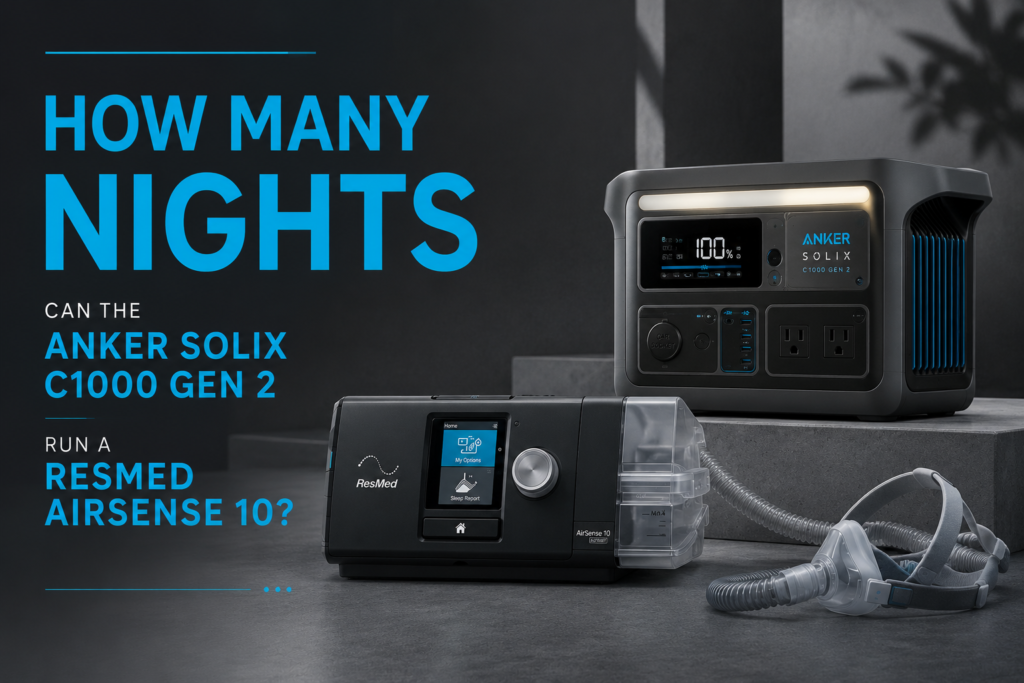
A CPAP machine is one device you never want to lose power during the night. For many people, a power outage means interrupted sleep, reduced therapy effectiveness, and unnecessary stress.
That is exactly why so many CPAP users are looking at the Anker SOLIX C1000 Gen 2 in 2026. With a 1024Wh LiFePO4 battery, ultra-fast charging, and UPS functionality, it has become one of the most popular backup solutions for ResMed AirSense 10 owners.
However, the biggest question remains simple: how many nights can the Anker SOLIX C1000 Gen 2 run a ResMed AirSense 10? The answer depends on several factors, including humidifier settings, sleep duration, and whether you use AC or DC power. Fortunately, dozens of real-world users have already tested the combination in homes, RVs, campsites, and emergency situations.
In this guide, you’ll discover actual runtime results, realistic expectations, and practical tips to maximize CPAP battery life.
Quick Answer
Most ResMed AirSense 10 users can expect approximately 3 to 6 nights of runtime from the Anker SOLIX C1000 Gen 2 on a single charge.
Real-world testing shows:
- Around 15%–17% battery consumption per night using AC power
- Around 10% battery consumption per night using a DC adapter
- Four-night runtimes reported by several users
- Multi-night camping performance without recharging
- Successful backup operation during extended outages
As a result, the Anker SOLIX C1000 Gen 2 ranks among the best CPAP battery backups currently available.
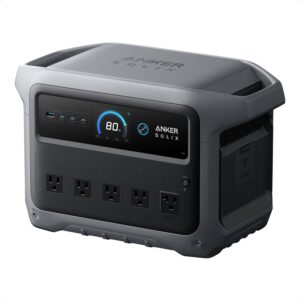
Why the Anker SOLIX C1000 Gen 2 Is Popular With CPAP Users
Several features make this power station especially attractive for sleep therapy users.
First, the 1024Wh LiFePO4 battery provides significantly more energy than traditional CPAP battery packs. Next, the less-than-10ms UPS switchover helps maintain therapy during unexpected outages. In addition, the rapid charging system allows users to recover a full night’s CPAP consumption in a surprisingly short amount of time.
Another advantage is versatility. Beyond powering a CPAP machine, the unit can also support refrigerators, routers, lights, phones, and other household essentials.
Real-World ResMed AirSense 10 Runtime Results
Nightly Battery Consumption
One owner purchased the Anker SOLIX C1000 Gen 2 specifically to support CPAP therapy while camping and during emergencies.
According to the review, a typical night reduced battery capacity from 100% to roughly 83%. In other words, the machine consumed approximately 17% of available power during sleep.
Based on those numbers:
- 17% battery use per night
- Roughly 5.8 nights from a full charge
Therefore, many AirSense 10 owners can realistically expect around five nights of operation.
Four-Day CPAP Backup Experience
Another user reported that the battery accidentally became the sole power source for a CPAP machine.
Rather than failing after a single night, the unit continued supplying power for four days. Although individual results vary, that experience demonstrates the impressive endurance of the SOLIX platform.
Multi-Night Camping Performance
Several campers reported running CPAP machines throughout entire weekend trips without concern.
Meanwhile, one owner stated that the battery powered two CPAP machines over a weekend while using only about half of the available capacity. Such results suggest substantial overhead for typical sleep therapy needs.
Snowstorm Backup Test
During a major winter storm, one family relied on two SOLIX units to maintain critical devices.
Among those devices was a ResMed AirSense 10. Throughout the emergency, the CPAP operated nightly for eight consecutive nights as part of the household backup strategy.
AC Power vs DC Power: A Huge Difference
The method used to power your CPAP can dramatically affect runtime.
Using AC Power
When a ResMed AirSense 10 is plugged into an AC outlet, electricity passes through several conversion stages.
As a result, some energy is lost before reaching the machine.
Typical user reports indicate:
- 15%–17% battery use per night
- Approximately 5–6 nights of runtime
Using a DC Adapter
A DC adapter removes unnecessary power conversions.
Consequently, efficiency improves and battery consumption drops.
Many users reported:
- Roughly 10% battery usage per night
- Potentially 8–10 nights of runtime
One reviewer specifically recommended avoiding unnecessary inverter use whenever possible. Because inverter losses add up over time, DC power is generally the most efficient solution.
Does the Humidifier Reduce Runtime?
Yes, and often by a significant amount.
Heated humidity requires continuous energy throughout the night. Consequently, battery depletion occurs much faster than with basic airflow therapy.
Users who wanted the longest possible runtime often reduced humidity settings or disabled heating entirely.
Typical expectations include:
- AC power with humidifier: 3–5 nights
- DC power with reduced humidity: up to 8–10 nights
Although comfort remains important, lowering heat settings can dramatically extend backup duration.
Recharging the Battery Between Nights
One reason CPAP users love the SOLIX C1000 Gen 2 is its charging speed.
AC Charging
A reviewer reported restoring a night’s CPAP usage from 83% to 100% in approximately 15 minutes.
Meanwhile, a full recharge can take less than an hour under ideal conditions.
Solar Charging
Pairing the power station with a 200W solar panel can produce impressive results.
For example, one owner recovered an entire night’s CPAP consumption in under two hours of sunlight. Therefore, long-term off-grid operation becomes realistic for campers and RV travelers.
Vehicle Charging
Drivers can also recharge while traveling.
According to user testing, replacing one night’s CPAP usage required less than two hours through a standard vehicle outlet.
Estimated ResMed AirSense 10 Runtime
| Setup | Battery Use Per Night | Estimated Runtime |
|---|---|---|
| AC power | 15%–17% | 5–6 nights |
| DC adapter | About 10% | 8–10 nights |
| AC with humidifier | 20%–30%+ | 3–5 nights |
| DC with reduced humidity | 8%–10% | Up to 10 nights |
Actual performance depends on pressure settings, climate control use, sleep duration, and environmental conditions.
Pros and Cons for CPAP Users
Pros
- Excellent multi-night runtime
- Very fast charging
- Reliable UPS functionality
- LiFePO4 battery chemistry
- Solar charging support
- Compact design for a 1000Wh class unit
- Easy battery monitoring
Cons
- Some users reported app connectivity issues
- Solar accessories may require separate purchases
- Heavier than dedicated CPAP batteries
- Internet requirements have frustrated some owners
- DC adapters are usually sold separately
Frequently Asked Questions
How many nights can the Anker SOLIX C1000 Gen 2 run a ResMed AirSense 10?
Most users report between three and six nights. However, a DC-powered setup may reach eight to ten nights under favorable conditions.
Is the Anker SOLIX C1000 Gen 2 good for CPAP backup during outages?
Yes. Thanks to UPS functionality and a large battery capacity, it performs exceptionally well during blackouts.
Does a DC adapter increase CPAP runtime?
Absolutely. Because fewer power conversions occur, energy efficiency improves significantly.
Can solar panels recharge the battery after one night of CPAP use?
Yes. In fact, several users recovered an entire night’s consumption in less than two hours using a 200W solar setup.
Can the Anker SOLIX C1000 Gen 2 power a ResMed AirSense 10 with a humidifier?
Yes, it can. Nevertheless, heated humidity increases energy consumption and reduces the total number of nights available.
Is the Anker SOLIX C1000 Gen 2 worth buying for CPAP users?
For most users, the answer is yes. Strong runtime, rapid charging, and reliable backup performance make it one of the top CPAP battery solutions available in 2026.
Final Verdict
The Anker SOLIX C1000 Gen 2 can realistically run a ResMed AirSense 10 for approximately five to six nights when using standard AC power. Meanwhile, a properly configured DC setup can extend runtime to as many as eight to ten nights.
Beyond runtime alone, the combination of UPS protection, solar charging compatibility, and ultra-fast recharging makes this power station especially attractive for CPAP users. As a result, it remains one of the strongest choices for camping, emergency preparedness, and home backup power in 2026.
If uninterrupted sleep therapy is your priority, the Anker SOLIX C1000 Gen 2 deserves a place near the top of your shortlist.


