

A portable power station is only as useful as your ability to recharge it. That’s why choosing the best solar panels for the EcoFlow DELTA 3 Classic is just as important as selecting the power station itself. Whether you’re preparing for power outages, camping off-grid, traveling in an RV, or building an emergency backup system, the right solar panel lets you generate clean, renewable energy wherever the sun is shining.
The EcoFlow DELTA 3 Classic supports solar charging, making it far more versatile than relying on wall outlets alone. However, not every solar panel offers the same balance of charging speed, portability, durability, and value. In this guide, we’ll compare the best options, explain who each panel is best for, and help you choose the right setup for your budget and power needs.
Quick Answer
If you want the best overall solar panel for the EcoFlow DELTA 3 Classic, the EcoFlow 220W Bifacial Solar Panel is the top recommendation.
It offers an excellent balance of:
- Fast charging
- High efficiency
- Foldable portability
- Durable construction
- Excellent compatibility with EcoFlow products
However, it’s not the only good choice.
If maximum charging speed is your priority, the EcoFlow 400W Portable Solar Panel is an outstanding premium option. Meanwhile, budget-conscious buyers can save money with the Renogy 200W Solar Panel, especially for fixed installations.
Why Solar Charging Makes the DELTA 3 Classic Better
Many buyers purchase the DELTA 3 Classic primarily for emergency backup power.
But during a prolonged outage, eventually every battery needs recharging.
That’s where solar panels become invaluable.
Instead of relying on:
- Grid electricity
- Gas generators
- Public charging stations
you can recharge using sunlight almost anywhere.
This makes solar charging especially useful for:
- Home emergency preparedness
- Camping
- RV travel
- Van life
- Remote cabins
- Off-grid work sites
- Outdoor events
Many DELTA 3 Classic owners who experienced severe weather later said they wished they had purchased solar panels from the beginning rather than after their first outage.
For a complete walkthrough of compatible charging methods, see our solar charging guide for beginners (EcoFlow DELTA 3 Classic Solar Charging Guide for Beginners).
How Solar Charging Works with the EcoFlow DELTA 3 Classic
The EcoFlow DELTA 3 Classic supports direct solar input through its solar charging port.
To achieve the best performance, you’ll need a panel—or combination of panels—that stays within the unit’s supported voltage and power limits.
Solar charging speed depends on several factors:
- Sunlight intensity
- Panel wattage
- Panel efficiency
- Panel angle
- Temperature
- Cloud cover
- Cable quality
Even the best solar panel won’t reach its rated output on cloudy days. However, larger panels generally recharge the DELTA 3 Classic much faster under ideal conditions.
For the latest specifications and solar input requirements, consult EcoFlow’s official documentation:
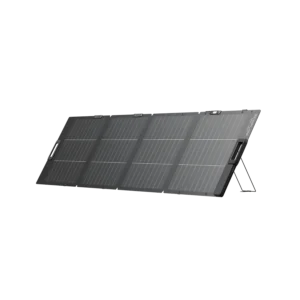
Best Overall: EcoFlow 220W Bifacial Solar Panel
Recommended for: Most DELTA 3 Classic owners
220W Bifacial Solar Panel
Why It’s Our Top Pick
For most people, the 220W Bifacial Solar Panel offers the best balance between portability and charging performance.
Unlike standard panels, its bifacial design captures reflected sunlight from the rear side, helping increase total energy production under the right conditions.
Its biggest advantages include:
- Foldable design
- Lightweight for travel
- High conversion efficiency
- Weather-resistant construction
- Excellent compatibility with EcoFlow systems
- Easy setup in campsites and backyards
Whether you’re preparing for emergencies or heading into the wilderness, it’s difficult to find a better all-around option.
Pros
- Excellent charging speed
- Highly portable
- Premium build quality
- Easy to transport
- Designed for EcoFlow power stations
- Performs well in changing outdoor conditions
Cons
- More expensive than rigid panels
- Rear-side energy gains depend on reflective surfaces
Best for: Campers, RV owners, homeowners, and anyone who wants the easiest plug-and-play experience.
Best Premium Option: EcoFlow 400W Portable Solar Panel
Recommended for: Fastest possible solar charging
EF ECOFLOW 400W Portable Solar Panel

If your goal is minimizing recharge time, the 400W Portable Solar Panel is the clear winner.
With nearly double the rated output of a 220W panel, it can dramatically reduce charging times when sunlight is strong.
This makes it ideal for:
- Extended power outages
- Full-time RV living
- Off-grid cabins
- Frequent outdoor work
- Heavy daily energy use
Although it’s larger and heavier, many buyers find the extra charging speed worth the trade-off.
Pros
- Very fast charging
- Premium efficiency
- Durable construction
- Excellent for extended outages
- High-quality folding design
Cons
- Higher price
- Bulkier to transport
- Less convenient for frequent hiking or backpacking
For homeowners building a serious emergency backup system, this is one of the strongest options available.
Best Budget Option: Renogy 200W Solar Panel
Recommended for: Budget-conscious buyers and permanent installations
Renogy Solar Panel 200 Watt

If you want dependable solar charging without paying for a premium folding panel, the Renogy 200W Solar Panel is an excellent alternative.
Unlike EcoFlow’s portable panels, this is best suited for:
- RV roof installations
- Cabins
- Tiny homes
- Semi-permanent off-grid systems
- DIY solar projects
Although it’s less portable, Renogy has built a strong reputation for durable, high-efficiency solar equipment.
Pros
- Excellent value for money
- Durable construction
- High efficiency
- Great for fixed installations
- Widely available
Cons
- Not foldable
- Heavier than portable panels
- Requires mounting hardware for permanent setups
Best for: Users who don’t need to move their solar panel frequently.
Solar Panel Comparison
| Solar Panel | Best For | Portability | Charging Speed | Value |
|---|---|---|---|---|
| 220W Bifacial Solar Panel | Most users | ★★★★★ | ★★★★☆ | ★★★★★ |
| EcoFlow 400W Portable Solar Panel | Fast charging | ★★★★☆ | ★★★★★ | ★★★★☆ |
| Renogy 200W Solar Panel | Budget & fixed installs | ★★☆☆☆ | ★★★☆☆ | ★★★★★ |
How to Choose the Best Solar Panel
Choose the 220W Bifacial Solar Panel if…
It’s the best choice if you:
- Camp regularly
- Want maximum portability
- Need reliable emergency backup
- Prefer plug-and-play compatibility
- Want the best balance of price and performance
For most DELTA 3 Classic owners, this is the easiest recommendation.
Choose the 400W Portable Solar Panel if…
Spend more for the 400W model if you:
- Experience frequent power outages
- Live off-grid
- Need the fastest recharge times
- Use the DELTA 3 Classic every day
- Want to maximize the unit’s 500W maximum solar input.
The larger panel is especially worthwhile if your power station is a critical part of your emergency preparedness plan.
Choose the Renogy 200W if…
The Renogy panel is ideal if you:
- Have a tighter budget
- Plan to mount the panel permanently
- Already own compatible solar cables
- Don’t need to carry the panel often
It sacrifices portability but delivers excellent long-term value.
Common Mistakes to Avoid
Many new buyers make the same mistakes when building a solar setup. Fortunately, they’re easy to avoid.
Buying Too Little Solar
One 100W panel may be enough for charging small electronics, but it can recharge a 1,024Wh battery slowly.
For frequent off-grid use, many owners find that 200–400W of solar capacity provides a much better experience.
Ignoring Weather Conditions
Solar panel ratings are measured under ideal laboratory conditions.
Real-world output changes based on:
- Cloud cover
- Temperature
- Shade
- Panel angle
- Time of day
Therefore, it’s smart to expect lower production than the advertised wattage.
Forgetting Essential Accessories
Several DELTA 3 Classic owners reported discovering after purchase that certain charging accessories weren’t included.
Before ordering, check whether you also need the recommended cables and accessories.
Our guide Accessories Every EcoFlow DELTA 3 Classic Owner Should Buy covers the most useful additions, from charging cables to storage bags and extension cords.
Not Learning the System Before an Emergency
If you’re buying the DELTA 3 Classic for storm preparedness, don’t leave everything sealed in the box.
Instead:
- Fully charge the battery
- Test solar charging
- Practice connecting appliances
- Learn how the app works
- Estimate your real-world runtime
A little preparation today can make a major difference during a future outage.
For official specifications, EcoFlow lists a maximum solar input of 500W, along with supported voltage limits and charging details.
Frequently Asked Questions
What is the best solar panel for the EcoFlow DELTA 3 Classic?
For most users, the EcoFlow 220W Bifacial Solar Panel is the best overall choice. It offers an excellent balance of charging speed, portability, durability, and seamless compatibility with the DELTA 3 Classic. It’s ideal for camping, RV travel, emergency preparedness, and general home backup.
Can the EcoFlow DELTA 3 Classic charge with third-party solar panels?
Yes. The DELTA 3 Classic can charge with compatible third-party solar panels, provided they meet EcoFlow’s supported voltage, current, and power input specifications. Always verify the panel’s electrical ratings before connecting it to avoid compatibility issues.
How many watts of solar panels should I use with the EcoFlow DELTA 3 Classic?
For most people:
- 200–220W is ideal for camping and occasional use.
- 400W is better for faster charging and extended outages.
- Up to the unit’s 500W maximum solar input can be used with compatible configurations, according to EcoFlow’s specifications.
Your ideal setup depends on how quickly you need to recharge and how often you’ll be off-grid.
Is the EcoFlow 400W Portable Solar Panel worth the extra cost?
If fast charging is a priority, yes.
The 400W panel significantly reduces charging time under good sunlight, making it an excellent investment for frequent off-grid users, RV owners, and homeowners who rely on the DELTA 3 Classic for emergency backup power.
For occasional weekend camping, however, the 220W Bifacial Solar Panel often provides the better balance of cost and portability.
Are bifacial solar panels better?
Bifacial panels can produce more energy because they capture sunlight from both the front and rear surfaces. When placed on bright or reflective ground, they may generate additional power compared to traditional single-sided panels.
However, the performance gain depends on environmental conditions, so the improvement varies by location and setup.
Can I leave my solar panel outside permanently?
That depends on the panel.
Rigid panels like the Renogy 200W Solar Panel are designed for long-term outdoor installation when mounted correctly. Foldable portable panels, including EcoFlow’s models, are weather-resistant but generally last longer when stored indoors after use instead of being left outside continuously.
Final Verdict
Choosing the best solar panels for the EcoFlow DELTA 3 Classic comes down to how and where you plan to use your power station.
For most buyers, the EcoFlow 220W Bifacial Solar Panel is the clear winner. It combines portability, high efficiency, durable construction, and easy compatibility, making it the best all-around option for camping, RV trips, and emergency preparedness.
If you need the fastest recharge times, the EcoFlow 400W Portable Solar Panel is worth the extra investment. Its higher output is ideal for extended outages, off-grid living, and users who rely heavily on their portable power station.
Meanwhile, the Renogy 200W Solar Panel offers outstanding value for fixed installations or budget-conscious buyers who don’t need a foldable design.
Whichever option you choose, adding solar charging transforms the DELTA 3 Classic from a portable battery into a renewable, self-sustaining power solution. It gives you greater independence during outages, lowers reliance on grid electricity, and ensures you’re better prepared for camping adventures or unexpected emergencies.


