
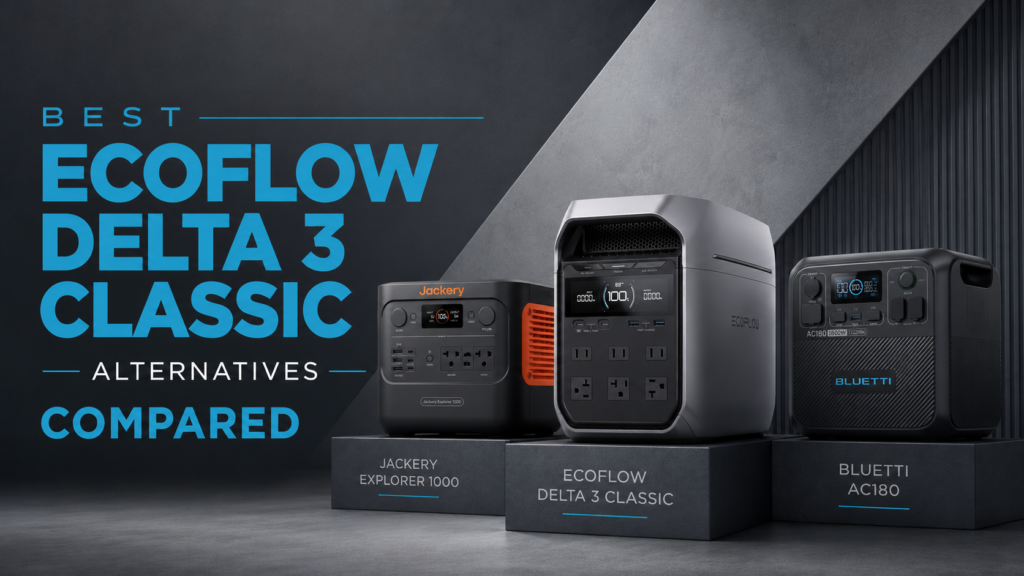
Choosing a portable power station isn’t as simple as picking the newest model. The EcoFlow DELTA 3 Classic has earned a strong reputation thanks to its fast charging, reliable UPS performance, and compact design. However, it’s not the perfect fit for everyone. Many buyers later discover they need expandable battery capacity, more solar input, or a lower price.
If you’re searching for the best EcoFlow DELTA 3 Classic alternatives, you’re in the right place. This guide compares today’s strongest competitors—including BLUETTI, Anker, Jackery, and even EcoFlow’s own lineup—to help you choose the right portable power station for home backup, camping, RV travel, emergency preparedness, or off-grid living.
Quick Answer
If you simply want the best alternatives:
| Best For | Recommendation |
|---|---|
| Overall Value | BLUETTI AC180 |
| Fast Charging & Smart Features | Anker SOLIX C1000 Gen 2 |
| Lightweight Portability | Jackery Explorer 1000 v2 |
| Maximum Capacity | BLUETTI Elite 200 V2 |
| Staying with EcoFlow | EcoFlow DELTA 3 Classic |
Why Look for an EcoFlow DELTA 3 Classic Alternative?
The DELTA 3 Classic is an excellent portable power station, but customer reviews consistently highlight a few limitations that may influence your decision.
What Buyers Love
Owners frequently praise:
- Extremely fast AC charging (about one hour)
- Reliable emergency backup power
- Excellent UPS functionality with fast switchover
- Quiet cooling fans
- Premium build quality
- Easy-to-use EcoFlow app
- Compact size for its capacity
- Reliable performance during storms and outages
Many customers successfully power refrigerators, CPAP machines, Wi-Fi routers, laptops, televisions, coffee makers, and even small heaters during extended outages.
For buyers comparing EcoFlow’s own lineup, our guide EcoFlow DELTA 3 Classic vs DELTA 3: Which One Should You Buy? explains the biggest differences between the two models.
Why Some Buyers Choose Alternatives
Despite its strengths, several recurring complaints appear in customer reviews.
The biggest drawback is the lack of battery expansion. Many buyers mistakenly assume every DELTA 3 model supports expansion batteries, only to discover the Classic version cannot be upgraded later.
Other common concerns include:
- Mandatory EcoFlow account for app setup
- Limited offline app functionality
- Missing solar charging accessories
- No alternator charging support for many van-life users
- Higher price than some competitors
- Limited upgrade path for growing power needs
If future expandability is important, you may also want to read EcoFlow DELTA 3 Classic vs DELTA 3 Plus: What’s the Difference?, where we cover EcoFlow’s expandable options in greater detail.
EcoFlow DELTA 3 Classic Alternatives at a Glance
| Model | Capacity | Output | Best For |
|---|---|---|---|
| EcoFlow DELTA 3 Classic | 1024Wh | 1800W | Fast charging & UPS |
| BLUETTI AC180 | 1152Wh | 1800W | Overall value |
| Anker SOLIX C1000 Gen 2 | ~1056Wh | 1800W | Smart features |
| Jackery Explorer 1000 v2 | ~1070Wh | 1500W | Lightweight travel |
| BLUETTI Elite 200 V2 | ~2000Wh | 2600W | Whole-home backup |
1. BLUETTI AC180 – Best Overall EcoFlow DELTA 3 Classic Alternative
Best for: Home backup, camping, RVs, and buyers seeking excellent value.
BLUETTI Portable Power Station AC180
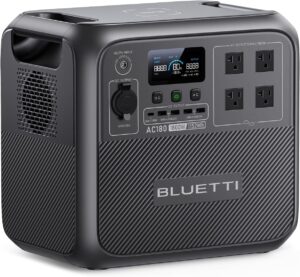
The BLUETTI AC180 consistently ranks among the strongest competitors in the 1,000Wh class. It offers a larger battery than the DELTA 3 Classic while maintaining the same 1,800W continuous AC output, making it a compelling option for users who want longer runtime without moving to a much heavier unit.
Pros
- Larger 1,152Wh battery
- Reliable LiFePO₄ battery chemistry
- 1,800W inverter handles most household appliances
- Strong solar charging support
- Excellent value for money
- Simple, user-friendly interface
Cons
- Slightly heavier than EcoFlow
- AC charging isn’t quite as fast
- App ecosystem isn’t as polished
Who Should Buy It?
The AC180 is ideal if your priority is maximum runtime per dollar. It works particularly well for camping, emergency preparedness, and powering refrigerators during outages.
Compared with the DELTA 3 Classic, you’ll likely notice:
- More usable battery capacity
- Better value
- Similar appliance compatibility
- Slightly slower recharge speeds
For many households, those trade-offs are worth it.
Verdict: If budget and runtime matter more than the fastest possible recharge, the BLUETTI AC180 is one of the best alternatives available.
2. Anker SOLIX C1000 Gen 2 – Best Premium Alternative
Best for: Home offices, backup power, smart-home users, and frequent travelers.
Anker SOLIX C1000 Gen 2 Portable Power Station
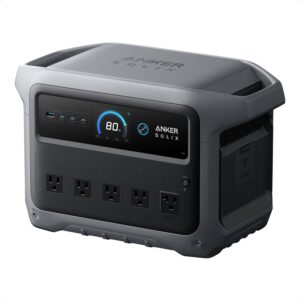
Anker has built an excellent reputation for producing reliable battery products, and the SOLIX C1000 Gen 2 continues that trend. It directly competes with the DELTA 3 Classic in capacity while focusing on intelligent battery management, compact design, and quiet operation.
One area where Anker stands out is its refined software experience. Many users appreciate the intuitive mobile app, detailed power monitoring, and straightforward setup process.
Pros
- Compact, travel-friendly design
- Long-lasting LiFePO₄ battery
- Strong app experience
- Fast charging capability
- Quiet operation
- Excellent reliability
Cons
- Slightly more expensive during regular pricing
- Fewer high-capacity upgrade options than larger systems
- Availability can fluctuate during peak seasons
Who Should Buy It?
If you frequently work from home, travel in an RV, or need dependable backup for laptops, networking equipment, or medical devices, the SOLIX C1000 Gen 2 is an outstanding choice. Its combination of portability, performance, and smart features makes it one of the closest competitors to the DELTA 3 Classic.
Verdict: Buyers who value a polished user experience and dependable everyday performance will find the Anker SOLIX C1000 Gen 2 hard to beat.
3. Jackery Explorer 1000 v2 – Best Lightweight Alternative
Best for: Camping, road trips, tailgating, and users who prioritize portability.
Jackery Explorer 1000 v2 Portable Power Station
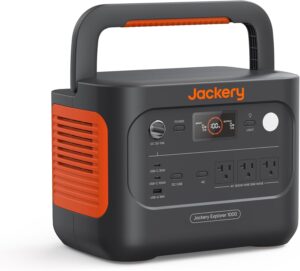
Jackery has long been one of the most recognizable names in portable power, and the Explorer 1000 v2 improves on previous generations with a lighter design, faster charging, and a durable LiFePO₄ battery.
While its continuous output is lower than the EcoFlow DELTA 3 Classic, it’s still capable of powering most everyday essentials, including laptops, lights, routers, TVs, mini-fridges, CPAP machines, and small kitchen appliances.
Pros
- Lightweight and easy to transport
- Reliable LiFePO₄ battery
- Fast recharge times
- Excellent build quality
- User-friendly interface
- Trusted brand with wide accessory availability
Cons
- 1,500W continuous output is lower than EcoFlow’s 1,800W
- Less suitable for power-hungry appliances
- Fewer premium smart features
Who Should Buy It?
If you’re frequently on the move, every pound matters. The Explorer 1000 v2 offers one of the best balances of portability, runtime, and reliability, making it a favorite for campers, overlanders, photographers, and weekend adventurers.
Verdict: For users who rarely need to run high-wattage appliances, the Jackery Explorer 1000 v2 is one of the easiest power stations to carry and live with.
4. BLUETTI Elite 200 V2 – Best High-Capacity Upgrade
Best for: Whole-home backup, large appliances, RVs, workshops, and extended outages.
BLUETTI Elite 200 V2 Portable Power Station
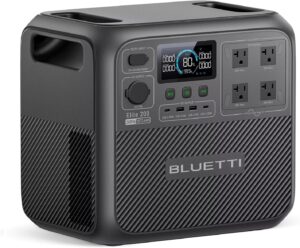
If your power needs have outgrown the 1,000Wh class entirely, the BLUETTI Elite 200 V2 is worth serious consideration.
With roughly twice the battery capacity of the EcoFlow DELTA 3 Classic and a significantly more powerful inverter, it’s designed for users who need longer runtimes and greater flexibility during prolonged outages.
Pros
- Approximately 2,000Wh battery capacity
- Higher AC output for demanding appliances
- Excellent solar charging capability
- Durable LiFePO₄ battery chemistry
- Better suited for extended emergency backup
- Ideal for larger RV setups
Cons
- More expensive
- Heavier and less portable
- Overkill for occasional camping trips
Who Should Buy It?
Choose the Elite 200 V2 if you regularly power refrigerators, freezers, power tools, multiple household circuits, or several devices simultaneously.
Its extra capacity can dramatically reduce recharge frequency during multi-day outages.
Verdict: If your budget allows and you expect growing power demands, stepping up to the Elite 200 V2 can be a smarter long-term investment than purchasing another 1,000Wh unit.
How Does the EcoFlow DELTA 3 Classic Compare?
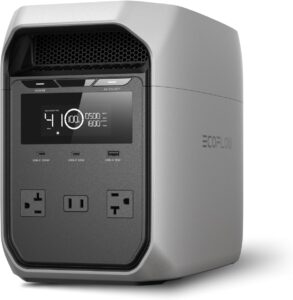
The EcoFlow DELTA 3 Classic remains one of the strongest choices in its class because it combines fast charging, reliable UPS functionality, and premium build quality in a compact package.
EcoFlow DELTA 3 Classic
Customer feedback consistently highlights several standout features:
- Approximately one-hour AC charging
- Reliable emergency backup during storms and outages
- Less than 10 ms UPS switchover for computers and networking equipment
- Quiet cooling fans
- High-quality construction
- Compact footprint
- Excellent app for monitoring battery health and scheduling charging
However, recurring customer reviews also reveal several limitations:
- No battery expansion
- Mandatory account for app configuration
- Limited offline app functionality
- Solar connectors may need to be purchased separately
- No alternator charging support
- Some buyers expected longer runtimes than a 1,024Wh battery can realistically deliver
If you’re deciding between EcoFlow models rather than switching brands, check out EcoFlow DELTA 3 Classic vs DELTA 2: Which Is the Better Value? to see whether the older expandable model better fits your needs.
Which Portable Power Station Is Best for You?
Choose the EcoFlow DELTA 3 Classic if:
- You want one of the fastest charging power stations available.
- UPS performance is your top priority.
- You value compact size and premium build quality.
- You need dependable backup for home electronics and medical devices.
BLUETTI AC180 if:
- You want more battery capacity for the money.
- Runtime matters more than the fastest recharge.
- You’re preparing for longer outages.
- Camping and RV trips are your primary use cases.
Anker SOLIX C1000 Gen 2 if:
- You prefer a polished app experience.
- Quiet operation is important.
- You frequently work remotely.
- You want premium reliability in a compact package.
Jackery Explorer 1000 v2 if:
- Portability is your highest priority.
- You mainly power smaller appliances and electronics.
- You travel frequently.
- You want a trusted, beginner-friendly system.
Choose the BLUETTI Elite 200 V2 if:
- You need significantly longer runtimes.
- You power multiple large appliances.
- You want greater flexibility for home backup.
- You’re planning for multi-day outages.
Buying Guide: What Matters Most?
Before choosing any portable power station, consider these key factors.
Battery Capacity
A larger battery provides longer runtimes but also increases weight and cost. Think about what you need to power and for how long.
Continuous Output
Always verify that the inverter can handle your appliances. Devices such as microwaves, coffee makers, heaters, and power tools require much higher wattage than laptops or phones.
Charging Speed
Fast charging is valuable during emergencies because you may have only a short window to recharge before another outage.
Solar Compatibility
If off-grid use is important, check the supported solar input and whether any required cables or adapters are included.
Expandability
Many buyers regret overlooking this feature. If your future power needs may grow, purchasing an expandable system now could save money later.
Common Mistakes to Avoid
Many customer reviews reveal the same purchasing mistakes. Avoid these common pitfalls:
- Assuming every EcoFlow DELTA 3 model supports expansion batteries.
- Overestimating runtime without calculating appliance wattage.
- Expecting all charging accessories to be included in the box.
- Ignoring the importance of UPS performance if protecting computers or medical equipment.
- Waiting until a storm is approaching before fully charging the battery.
- Choosing solely based on battery capacity instead of considering output power and charging speed.
A little planning before you buy can prevent disappointment and ensure your portable power station meets your needs.
Frequently Asked Questions
Is the EcoFlow DELTA 3 Classic still worth buying?
Yes. The EcoFlow DELTA 3 Classic remains one of the best portable power stations in the 1,000Wh class. Its biggest strengths are ultra-fast AC charging, reliable UPS functionality, quiet operation, and premium build quality. However, if you think you’ll need more capacity later, an expandable model may be a better investment.
What is the best EcoFlow DELTA 3 Classic alternative?
For most buyers, the BLUETTI AC180 offers the best balance of battery capacity, performance, and value. If you prefer premium software and a refined user experience, the Anker SOLIX C1000 Gen 2 is another excellent choice.
Can the EcoFlow DELTA 3 Classic power a refrigerator?
Yes. With its 1,800W continuous inverter, the DELTA 3 Classic can run most household refrigerators during a power outage. Actual runtime depends on the refrigerator’s energy consumption, ambient temperature, and compressor cycling.
Does the EcoFlow DELTA 3 Classic support battery expansion?
No. Unlike some other EcoFlow models, the DELTA 3 Classic cannot connect to expansion batteries. This is one of the most common reasons buyers choose another model or upgrade to the DELTA 3 or DELTA 3 Plus instead.
Which portable power station is best for camping?
If portability is your priority, the Jackery Explorer 1000 v2 is one of the best options thanks to its lighter weight. For longer trips requiring more runtime, the BLUETTI AC180 provides additional battery capacity while remaining portable enough for camping and RV travel.
Which portable power station is best for home backup?
For occasional outages, the EcoFlow DELTA 3 Classic and Anker SOLIX C1000 Gen 2 are excellent choices. However, if you regularly experience extended power failures, the BLUETTI Elite 200 V2 offers substantially more capacity and can power more devices for longer.
Is LiFePO₄ better than lithium-ion batteries?
For most portable power stations, LiFePO₄ (Lithium Iron Phosphate) is the preferred chemistry. It offers a longer cycle life, improved thermal stability, and better durability compared with traditional lithium-ion batteries, making it ideal for emergency backup and frequent use.
Final Verdict
The best EcoFlow DELTA 3 Classic alternative depends on how you plan to use your portable power station.
If you want the best overall value, the BLUETTI AC180 is difficult to beat thanks to its larger battery and competitive pricing. Buyers who prioritize a polished smart experience should consider the Anker SOLIX C1000 Gen 2, while frequent travelers will appreciate the lightweight Jackery Explorer 1000 v2. For serious home backup or RV setups, the BLUETTI Elite 200 V2 stands out with its significantly larger capacity.
That said, the EcoFlow DELTA 3 Classic remains an outstanding option for users who value fast charging, reliable UPS performance, quiet operation, and dependable emergency power. Just be sure you don’t need battery expansion before making your purchase.
By matching your budget, runtime requirements, and future power needs to the right model, you’ll end up with a portable power station that serves you well for years to come.


