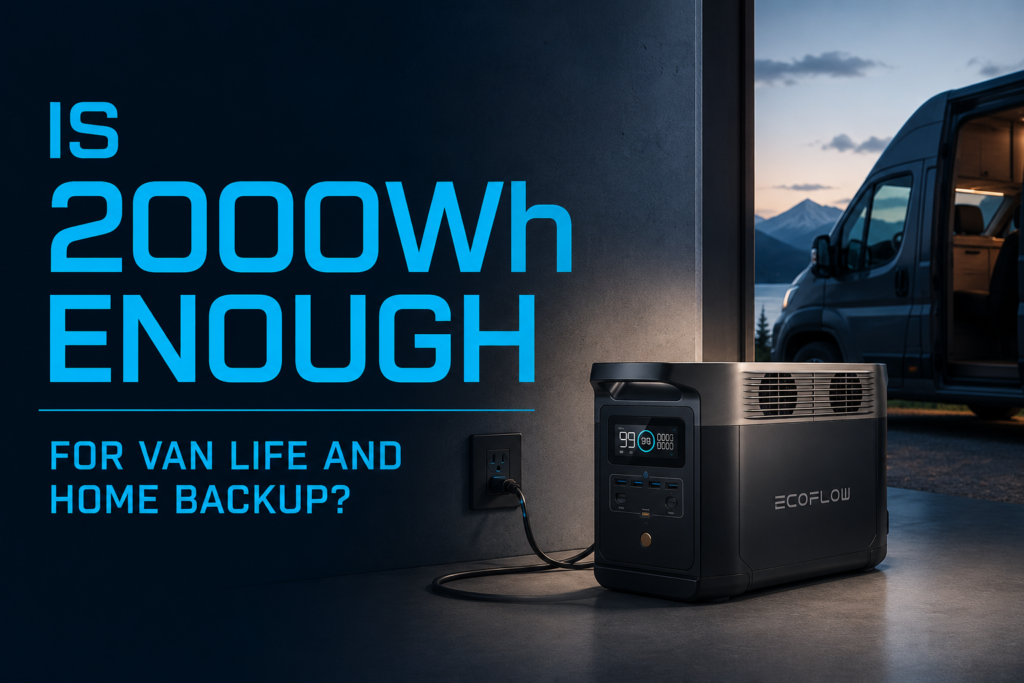
Whether you’re living on the road, preparing for power outages, or building an off-grid setup, battery capacity is one of the most important decisions you’ll make. Many buyers looking at larger portable power stations eventually ask the same question: Is 2000Wh enough for van life and home backup?
The answer is yes—for many people. A quality 2000Wh power station can comfortably power essential appliances, electronics, refrigerators, internet equipment, CPAP machines, and many van life necessities. However, the actual runtime depends on your energy consumption, appliance wattage, and whether you can recharge through solar panels, vehicle charging, or shore power.
In this guide, we’ll examine real-world usage, common limitations, customer experiences, and whether a 2000Wh power station like the BLUETTI Elite 200 V2 is sufficient for your lifestyle.
Quick Answer
For most users, a 2000Wh power station is enough for both van life and emergency home backup.
Typical uses include:
- Refrigerators and freezers
- Wi-Fi routers and Starlink
- Laptops and remote work equipment
- CPAP machines
- Lighting and fans
- Phones and tablets
- Coffee makers and small kitchen appliances
- Portable fridges in vans and RVs
However, high-power heating appliances such as space heaters, electric cookers, and air conditioners can drain a 2000Wh battery quickly.
What Can a 2000Wh Power Station Run?
A 2000Wh power station offers roughly double the energy capacity of a typical 1000Wh unit.
Common devices powered by users include:
- Refrigerators
- Freezers
- Microwaves
- Air fryers
- Coffee makers
- Starlink systems
- Routers and modems
- Laptops
- Portable refrigerators
- CPAP machines
- Power tools
For a deeper appliance breakdown, see What Can a 2000Wh Power Station Run? Real Uses.
Is 2000Wh Enough for Van Life?
For many van dwellers, the answer is absolutely yes.
Typical Van Life Power Needs
Daily van life power consumption often includes:
| Device | Daily Usage |
|---|---|
| Laptop | 50–100Wh |
| Starlink | 300–600Wh |
| Portable Fridge | 300–800Wh |
| Lights | 50–100Wh |
| Phone Charging | 20–50Wh |
| Fan | 50–150Wh |
A 2000Wh battery can comfortably handle these loads for a day or more before requiring recharge.
Why Van Lifers Like 2000Wh Systems
Users frequently reported using 2000Wh-class power stations for:
- Road trips
- Overlanding
- RV travel
- Remote work
- Solar-powered setups
- Off-grid camping
In addition, a 2000Wh battery provides enough reserve capacity to handle cloudy days or unexpected power needs.
Is 2000Wh Enough for Home Backup?
For essential backup power, yes.
Devices Commonly Powered During Outages
Customer reviews frequently mentioned:
- Refrigerators
- Freezers
- Internet equipment
- Lighting
- Fans
- Medical devices
- Home office equipment
Many users purchased 2000Wh power stations specifically for emergency preparedness and storm outages.
Realistic Expectations
A 2000Wh battery is excellent for:
- Essential appliances
- Food preservation
- Communications
- Work-from-home setups
However, it is not designed for:
- Whole-home backup
- Electric heating
- Central air conditioning
- Electric water heaters
Therefore, understanding your actual power consumption is critical.
Real-World Runtime Examples
Refrigerator
Typical average consumption:
- 100–150W cycling load
Expected runtime:
- 12–24+ hours
For more detailed estimates, see How Long Will a 1000Wh Power Station Run a Fridge? and compare how doubling battery capacity affects runtime.
Starlink and Router Setup
Typical load:
- 60–100W
Expected runtime:
- 18–30 hours
CPAP Machine
Typical load:
- 30–60W
Expected runtime:
- Several nights
Read How to Power a CPAP With a 1000Wh Power Station to understand how DC connections can significantly extend runtime.
Portable Fridge
Typical draw:
- 20–50W average
Expected runtime:
- Multiple days under moderate conditions.
Common Problems Reported by Owners
Although users generally praised 2000Wh-class power stations, several recurring issues appeared.
Heavy Weight
The most common complaint was portability.
Many users noted:
- Weight exceeding 50 pounds
- Difficult carrying over long distances
- Better suited for vehicle-based use
Solar Input Limitations
Some users found:
- 60V solar input restrictions limiting panel configurations
- Additional planning required for solar arrays
No Battery Expansion
Several owners wished for:
- Expansion battery support
- Greater long-term scalability
App Learning Curve
Some users initially found:
- Scheduling confusing
- Charging settings difficult
- App navigation unintuitive
Fortunately, most users reported improvements after setup.
Common Problems and Solutions
Problem: Unit Feels Too Heavy
Solution:
- Use a dolly cart.
- Take advantage of dual carry handles.
- Use primarily for van life, RVs, and home backup rather than frequent carrying.
Problem: Generator Charging Trips
Solution:
- Lower charging power through the app.
- Match charging speed to generator capacity.
Problem: Solar Charging Issues
Solution:
- Keep solar voltage below the 60V limit.
- Use parallel solar panel configurations when necessary.
- Update firmware if MPPT tracking problems occur.
Problem: Unexpected Shutdowns
Solution:
- Stay below the 2600W continuous inverter rating.
- Avoid running multiple high-wattage appliances simultaneously.
Problem: Incorrect Battery Percentage
Solution:
- Perform a full charge/discharge calibration cycle.
- Periodically charge to 100% for battery balancing.
Best Practices for Van Life and Home Backup
First, Use Solar Charging
Many users recommend pairing the battery with:
- 200W–400W portable solar panels
This greatly extends off-grid capability.
Next, Use DC Devices When Possible
DC-powered devices improve efficiency and reduce inverter losses.
Examples include:
- Portable fridges
- Lighting
- Electronics
Keep Firmware Updated
Multiple owners reported performance improvements after updates.
Test Your Setup Before Emergencies
Users consistently recommended testing:
- Refrigerators
- Internet equipment
- Medical devices
- Power tools
before relying on them during outages.
Manage High-Power Loads Carefully
Microwaves, kettles, air fryers, and heaters can quickly consume battery capacity.
BLUETTI Elite 200 V2: A Popular 2000Wh Option
One of the most frequently discussed 2000Wh-class power stations is the BLUETTI Elite 200 V2.
Users commonly purchase it for:
- Home backup
- Van life
- RV travel
- Refrigerators and freezers
- Solar energy storage
- Remote work setups
Its strongest advantages include:
- Large capacity
- Strong inverter output
- Solar charging support
- Home backup versatility
For a complete breakdown of performance, strengths, drawbacks, and real-world user experiences, read our BLUETTI Elite 200 V2 Review: Is It Worth Buying in 2026?
Frequently Asked Questions
Is 2000Wh enough for van life?
For most van dwellers, yes. It can power refrigerators, laptops, internet equipment, lighting, and other daily essentials.
Is 2000Wh enough for home backup?
Yes, for essential devices such as refrigerators, routers, lights, and medical equipment. It is not intended for whole-home backup.
How long will a 2000Wh power station run a refrigerator?
Depending on refrigerator efficiency and usage patterns, often between 12 and 24 hours or more.
Can a 2000Wh power station run Starlink?
Yes. Many users successfully power Starlink systems for extended periods.
Is solar charging worth it for a 2000Wh power station?
Absolutely. Solar panels significantly extend runtime for van life and emergency preparedness.
What is the biggest drawback of a 2000Wh power station?
Weight is the most frequently mentioned complaint among owners.
Can a 2000Wh power station replace a generator?
For many quiet indoor applications, yes. However, long-term backup often benefits from combining battery storage with solar panels or a generator.
Final Verdict
So, is 2000Wh enough for van life and home backup?
For most people, yes. A 2000Wh power station provides enough energy to support refrigerators, internet equipment, CPAP machines, laptops, portable fridges, lighting, and many daily essentials. It strikes an excellent balance between portability and capability while remaining practical for both vehicle-based living and emergency preparedness.
The key is setting realistic expectations. While a 2000Wh battery can easily handle critical loads, it is not designed for continuous operation of high-power heating appliances or whole-home backup systems.
When paired with solar panels and smart energy management, a 2000Wh power station can become one of the most versatile power solutions available for van life, RV travel, camping, and home backup.