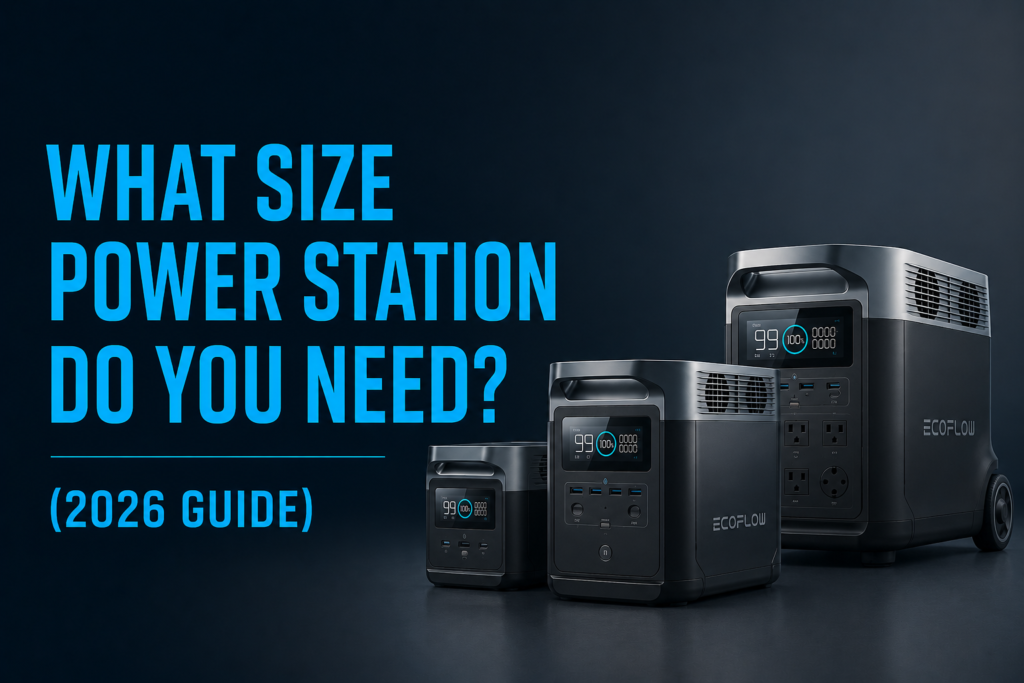
Choosing the right battery can feel confusing. With so many options from 500Wh to 2000Wh and beyond, most people end up asking the same question: what size power station do you need for your home, van life, or camping setup?
The answer depends on how much energy your devices use, how long you need backup power, and whether you plan to recharge with solar or a generator. However, most real-world users fall into just a few clear categories—making the decision easier than it seems.
In this guide, you’ll learn exactly how to choose the right size power station, with real examples, comparisons, and internal links to help you dive deeper into specific use cases like fridges, CPAP machines, camping, and full home backup systems.
Quick Answer
- 200–500Wh: Camping fans, phones, lights, weekend trips
- 1000Wh: CPAP, fridge backup, camping + small home essentials
- 2000Wh: Van life, serious home backup, refrigerators + multiple devices
- 3000Wh+: Extended off-grid living or near full-home backup systems
However, real usage depends heavily on wattage, not just battery size.
How to Choose the Right Power Station Size
The easiest way to decide is to break your needs into three questions:
1. What are you powering?
Start by listing your devices:
- Refrigerator
- CPAP machine
- Laptop or TV
- Lights and fans
- Internet (router or Starlink)
- Kitchen appliances
For example, refrigerators alone can heavily influence your choice. If you want detailed runtime expectations, see How Long Will a 2000Wh Power Station Run a Fridge?
2. How long do you need backup?
Next, define duration:
- 4–8 hours → small power station
- 1 day → 1000Wh range
- 1–3 days → 2000Wh range
- Multiple days → solar + large battery system
Meanwhile, adding solar panels can significantly extend runtime for any size system.
3. Will you recharge?
Recharge options change everything:
- Wall charging (fastest)
- Solar charging (off-grid flexibility)
- Vehicle charging (travel use)
As a result, even a smaller battery can last longer with good solar input.
1000Wh vs 2000Wh: What’s the Real Difference?
🔋 1000Wh Power Stations
Best for:
- Camping trips
- CPAP machines
- Small fridge backup
- Minimal home essentials
For real-world usage examples, see What Can a 1000Wh Power Station Run?
Typical runtime examples:
- CPAP: 1–3 nights
- Fridge: 12–24 hours
- Router + lights: 1–2 days
However, they may struggle with multiple devices at once.
⚡ 2000Wh Power Stations
Best for:
- Van life setups
- RV travel
- Home backup systems
- Multiple appliance usage
Learn more in What Can a 2000Wh Power Station Run? Real Uses
Typical runtime examples:
- Refrigerator: 12–36 hours
- CPAP: several nights
- Starlink + laptop + fridge: 1 day or more
Meanwhile, solar charging can extend usage significantly.
When a 1000Wh Power Station Is Enough
A 1000Wh unit is enough if you:
- Only need basic emergency backup
- Use a CPAP machine
- Go camping on weekends
- Power small electronics only
However, once you add refrigeration or multiple devices, capacity becomes limited quickly.
For camping-focused users, see Is a 1000Wh Power Station Overkill for Camping?
When You Need a 2000Wh Power Station
A 2000Wh system makes more sense if you:
- Run a refrigerator during outages
- Travel in a van or RV
- Work remotely off-grid
- Need multi-device backup power
In addition, many users prefer 2000Wh systems because they reduce recharge frequency.
For deeper insight, read Is 2000Wh Enough for Van Life and Home Backup?
Real-World Usage Scenarios
Camping Setup
- Fan
- Lights
- Phone charging
👉 500–1000Wh is usually enough
CPAP + Camping
- CPAP machine
- Small fan
- Phone/laptop
👉 1000Wh recommended
See also How to Power a CPAP With a 1000Wh Power Station
Home Backup Setup
- Refrigerator
- Router
- Lights
- Medical devices
👉 1000Wh (short outages) or 2000Wh (extended outages)
Van Life Setup
- Fridge
- Starlink
- Laptop
- Lighting
👉 2000Wh is ideal
Common Mistakes When Choosing Size
Buying too small
Many users underestimate:
- Refrigerator consumption
- Inverter losses
- Multi-device usage
Ignoring surge power
Some appliances need high startup power.
Not planning recharge
Without solar or generator input, even large batteries can drain quickly.
Frequently Asked Questions
What size power station do I need for home backup?
Most homes use either 1000Wh for essentials or 2000Wh for full refrigerator + device backup.
Is 1000Wh enough for a fridge?
Yes, but only for short durations (12–24 hours depending on efficiency).
Is 2000Wh better than 1000Wh?
Yes for multi-device use, van life, and longer outages, but it is heavier and more expensive.
Can a small power station run a CPAP?
Yes. A 1000Wh unit is usually ideal for CPAP users.
Do I need solar with a power station?
Not required, but strongly recommended for long outages or off-grid use.
Final Verdict
So, what size power station do you need?
- 500Wh: Light camping and basic devices
- 1000Wh: Balanced choice for CPAP and short backup
- 2000Wh: Best all-round solution for van life and home backup
In conclusion, the right size depends less on the battery itself and more on how many devices you want to run and how long you need them powered.
For most users today, a 1000Wh–2000Wh power station range is the sweet spot for flexibility, reliability, and real-world emergency readiness.