

If you’re shopping for a 1kWh portable power station, you’ve probably narrowed your choices to the EcoFlow DELTA 3 Classic and the EcoFlow DELTA 2. At first glance, they look very similar—they both feature a 1024Wh LiFePO4 battery, 1800W pure sine wave inverter, fast AC charging, and EcoFlow’s well-known mobile app.
However, after analyzing hundreds of real customer experiences, it’s clear these two models are designed for different buyers.
The DELTA 3 Classic focuses on quieter operation, faster UPS performance, and a more refined everyday experience, while the DELTA 2 remains popular because of its expandable battery system and proven reliability over several years.
In this updated comparison, we’ll compare their specifications, real-world performance, customer feedback, and overall value so you can decide which model deserves your money.
Quick Verdict
Buy the EcoFlow DELTA 3 Classic if:
- You want the newest hardware
- Fast emergency charging matters
- You need a reliable UPS for computers or networking equipment
- Quiet operation is important
- You don’t need expansion batteries
EcoFlow DELTA 3 Classic
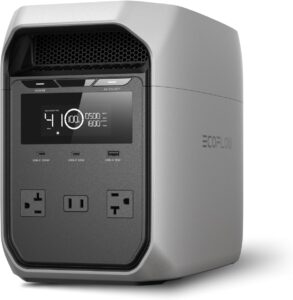
Buy the EcoFlow DELTA 2 if:
- You want expandable battery capacity
- You expect your backup needs to grow later
- You already own EcoFlow expansion batteries
- You prefer long-term flexibility over newer features
EF ECOFLOW DELTA 2
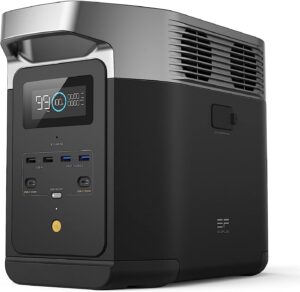
EcoFlow DELTA 3 Classic vs DELTA 2 Specifications
| Feature | EcoFlow DELTA 3 Classic | EcoFlow DELTA 2 |
|---|---|---|
| Battery Capacity | 1024Wh | 1024Wh |
| Battery Chemistry | LiFePO4 | LiFePO4 |
| Battery Cycles | 4,000+ | 3,000+ |
| AC Output | 1800W | 1800W |
| Surge Output | 3600W | 2700W (X-Boost supported) |
| UPS Switchover | <10ms | Around 30ms EPS |
| AC Recharge | About 1 hour | About 80 minutes |
| Solar Charging | Up to 400W | Up to 500W |
| Battery Expansion | ❌ No | ✅ Yes |
| App Control | Yes | Yes |
| Weight | Slightly lighter | Slightly heavier |
Design and Build Quality
Both power stations feature EcoFlow’s premium industrial design with sturdy handles, durable plastic construction, and excellent portability.
However, customer feedback consistently shows that the DELTA 3 Classic feels more refined.
Owners frequently mention:
- Better handle comfort
- Improved outlet spacing
- Premium packaging
- Quieter cooling fans
- Better thermal management
- Higher-quality finish
Many buyers upgrading from older EcoFlow models were pleasantly surprised by how much quieter the DELTA 3 Classic operates during charging and heavy loads.
The DELTA 2 still receives praise for its durability, but some users mention louder fans and more noticeable heat during rapid charging.
Winner: DELTA 3 Classic
Battery Technology
Both units use long-lasting LiFePO4 batteries, making them excellent choices for years of regular use.
However, the DELTA 3 Classic benefits from EcoFlow’s newer battery management system.
Customers frequently report:
- Better battery efficiency
- Cooler temperatures
- Stable charging
- Excellent standby performance
The DELTA 2 still performs well, but long-term users occasionally report needing battery recalibration after firmware updates or extended UPS use.
Winner: DELTA 3 Classic
Charging Speed
Fast charging has always been one of EcoFlow’s biggest advantages.
DELTA 3 Classic
Customers repeatedly praise the ability to recharge from nearly empty to full in roughly one hour.
This is especially valuable during:
- Storm preparation
- Unexpected outages
- RV travel
- Weekend camping
Many reviewers mention plugging it in for a short time before leaving home and having a fully charged battery ready.
DELTA 2
The DELTA 2 is also extremely fast.
Most owners report full charging in around 80 minutes, which remains one of the fastest recharge speeds in its class.
The biggest complaint isn’t charging speed—it’s fan noise.
Several users lower the charging speed in the EcoFlow app to reduce cooling fan noise.
Winner: DELTA 3 Classic
UPS Performance
This is one of the largest differences between these two models.
DELTA 3 Classic
Real customers consistently praise the sub-10ms UPS switchover.
People successfully use it with:
- Desktop PCs
- NAS servers
- Wi-Fi routers
- CPAP machines
- Refrigerators
- Medical equipment
Several buyers even replaced dedicated UPS systems because the DELTA 3 Classic combines backup power with much larger battery capacity.
DELTA 2
The DELTA 2 includes an Emergency Power Supply (EPS), but its approximately 30ms transfer time isn’t ideal for sensitive computers.
Some reviewers report:
- PCs shutting down
- Router interruptions
- Needing a separate UPS for desktop computers
For refrigerators and general appliances, however, the DELTA 2 performs well.
Winner: DELTA 3 Classic
Noise Levels
One of the biggest improvements reported by customers is the quieter cooling system on the DELTA 3 Classic.
Owners frequently describe it as:
- Noticeably quieter
- Cooler under heavy loads
- Less distracting indoors
- Better suited for bedrooms and home offices
The DELTA 2 receives far more complaints about:
- Loud charging fans
- Fan speed changes
- Heat during fast charging
Fortunately, many owners solve this by reducing charging speed inside the EcoFlow app.
Winner: DELTA 3 Classic
Home Backup Performance
Both power stations excel during power outages.
Customers successfully power:
- Refrigerators
- Freezers
- Wi-Fi routers
- TVs
- Coffee makers
- Lights
- Fans
- Medical devices
- Internet equipment
The DELTA 3 Classic receives particularly strong praise from customers caring for elderly family members or relying on CPAP machines and oxygen concentrators, thanks to its dependable UPS performance and quiet operation.
The DELTA 2 is equally capable for essential appliances but is often chosen by homeowners planning to expand their backup capacity over time.
Battery Expansion
This is the single biggest difference between these two portable power stations.
EcoFlow DELTA 3 Classic
The DELTA 3 Classic does not support expansion batteries.
This is also the most common complaint from verified buyers.
Many customers assumed every DELTA 3 model supported additional batteries, only to discover after purchase that the Classic version is limited to its built-in 1024Wh capacity.
If you know you’ll only need around 1kWh of storage for camping, emergency backup, or occasional off-grid use, this won’t be an issue. However, if your energy needs grow over time, you’ll need to purchase a completely new power station rather than adding extra capacity.
Pros
- Simpler design
- Lower initial cost
- No extra expansion hardware needed
Cons
- No future upgrade path
- Less suitable for long-term home backup
- Frequent source of buyer regret
EcoFlow DELTA 2
The DELTA 2 supports EcoFlow Smart Extra Batteries, allowing users to increase total capacity significantly.
Many long-term owners specifically purchased the DELTA 2 because they wanted the flexibility to expand later instead of replacing the entire unit.
Users have successfully built modular home backup systems by adding expansion batteries or even purchasing a second DELTA 2 during sales.
For homeowners preparing for extended outages, this flexibility is a major advantage.
Winner: DELTA 2
Solar Charging
Both models support solar charging, making them excellent choices for camping, RV travel, and emergency preparedness.
DELTA 3 Classic
Customers appreciate:
- Fast solar charging
- Reliable MPPT performance
- Easy off-grid charging
- Great compatibility with portable solar panels
However, one recurring complaint is that EcoFlow does not include the XT60i solar connector in the box.
Many buyers also discover they need to purchase the vehicle charging cable separately.
DELTA 2
The DELTA 2 supports a slightly higher maximum solar input, giving it a small advantage for users with larger solar arrays.
Experienced owners recommend:
- Using quality portable panels
- Mounting fixed panels outdoors for better efficiency
- Pairing the unit with solar during extended outages
Some users also mention purchasing MC4-to-XT60 cables separately because they aren’t always included.
Winner: DELTA 2 (slight advantage)
EcoFlow App Experience
Both power stations use the EcoFlow mobile app for monitoring, firmware updates, charging schedules, and advanced settings.
Useful features include:
- Real-time battery monitoring
- Input and output tracking
- Charging speed adjustments
- Battery health information
- Scheduled charging
- Time-of-use electricity management
- Remote monitoring
However, customer feedback reveals similar frustrations on both models.
Common complaints include:
- Mandatory EcoFlow account
- Internet required for some settings
- Firmware updates occasionally changing settings
- Bluetooth functionality being limited without authentication
The DELTA 3 Classic receives additional criticism because some owners discovered they couldn’t access certain Bluetooth controls after app authentication expired during an internet outage.
Winner: Tie
Real Customer Experience
Why Buyers Love the DELTA 3 Classic
After reviewing customer feedback, these strengths appear most often:
- Extremely fast charging
- Excellent UPS performance
- Quiet cooling system
- Premium build quality
- Reliable emergency backup
- Compact size
- Long battery life
- Easy setup
- Great medical-device backup
- High inverter performance
Many owners specifically mention the peace of mind it provides during hurricanes, winter storms, and unexpected blackouts.
Biggest DELTA 3 Classic Complaints
The most common issues include:
- No expansion battery support
- App account requirement
- Internet dependency for some app functions
- Missing XT60i solar connector
- Missing vehicle charging cable
- No alternator charging support
- Occasional warranty frustrations
Interestingly, many buyers say they would still purchase it again despite these limitations.
Why Buyers Love the DELTA 2
Long-term owners consistently praise:
- Expandable battery ecosystem
- Proven reliability
- Excellent fast charging
- Strong inverter performance
- Great home backup capability
- Flexible energy management
- High-quality LiFePO4 battery
- X-Boost support
- Reliable camping performance
Several users have successfully powered refrigerators overnight, home office equipment during outages, and essential appliances while waiting for generators to be refueled.
Biggest DELTA 2 Complaints
Customer feedback highlights several recurring drawbacks:
- Loud cooling fans
- 30ms EPS transfer isn’t ideal for sensitive computers
- Mandatory app for advanced settings
- Expansion accessories can be expensive
- Missing charging cables in some packages
- Firmware glitches after updates
- Higher idle power consumption than newer competitors
Despite these complaints, most owners remain satisfied because of the unit’s flexibility and expandability.
Which One Should You Buy?
Buy the EcoFlow DELTA 3 Classic if:
– You want EcoFlow’s newest 1kWh model.
– You need an excellent UPS for computers, networking equipment, or medical devices.
– Quiet operation is important.
– You want one of the fastest charging portable power stations available.
– You don’t plan to expand battery capacity in the future.
EcoFlow DELTA 3 Classic
Buy the EcoFlow DELTA 2 if:
– You want expandable battery capacity.
– Expect your energy needs to grow.
– You plan to build a larger home backup system.
– Slightly louder fans aren’t a concern.
– Long-term flexibility matters more than having EcoFlow’s newest hardware.
EF ECOFLOW DELTA 2
If you’re still comparing EcoFlow models, these guides may also help:
- EcoFlow DELTA 3 Classic Review After Real Customer Feedback
- EcoFlow DELTA 3 Classic vs DELTA 2: Which Is the Better Value?
- Best EcoFlow Portable Power Stations Compared
Frequently Asked Questions
Is the EcoFlow DELTA 3 Classic better than the DELTA 2?
For most users, yes. It offers quieter operation, a faster UPS transfer time, improved battery longevity, and quicker AC charging. However, if battery expansion is a priority, the DELTA 2 remains the better option.
Can the DELTA 3 Classic use expansion batteries?
No. Unlike the DELTA 2, the DELTA 3 Classic cannot connect to EcoFlow expansion batteries.
Which model is better for home backup?
Both perform well for powering essential appliances. The DELTA 3 Classic is better for sensitive electronics thanks to its sub-10ms UPS, while the DELTA 2 is better for users who want to expand their backup capacity over time.
Which is quieter?
Customer reviews consistently indicate that the DELTA 3 Classic operates more quietly than the DELTA 2, especially during fast charging and heavy loads.
Is upgrading from the DELTA 2 worth it?
If you need quieter operation, faster UPS performance, or improved battery durability, the upgrade can be worthwhile. If you rely on expansion batteries, keeping the DELTA 2 is usually the better choice.
Final Verdict
Although these power stations share many specifications, real-world ownership tells a different story.
The EcoFlow DELTA 3 Classic is the better choice for buyers who value fast charging, quiet operation, dependable UPS performance, and a refined user experience. It excels as a portable backup solution for homes, RVs, camping trips, and emergency preparedness.
The EcoFlow DELTA 2, however, remains an excellent option for users who want an expandable energy system. Its compatibility with extra batteries makes it a smarter long-term investment for homeowners planning to increase their backup capacity without replacing the entire unit.
If you only need a reliable 1kWh power station today, the DELTA 3 Classic is the stronger overall recommendation. If future expansion is part of your plan, the DELTA 2 continues to offer better long-term value.


