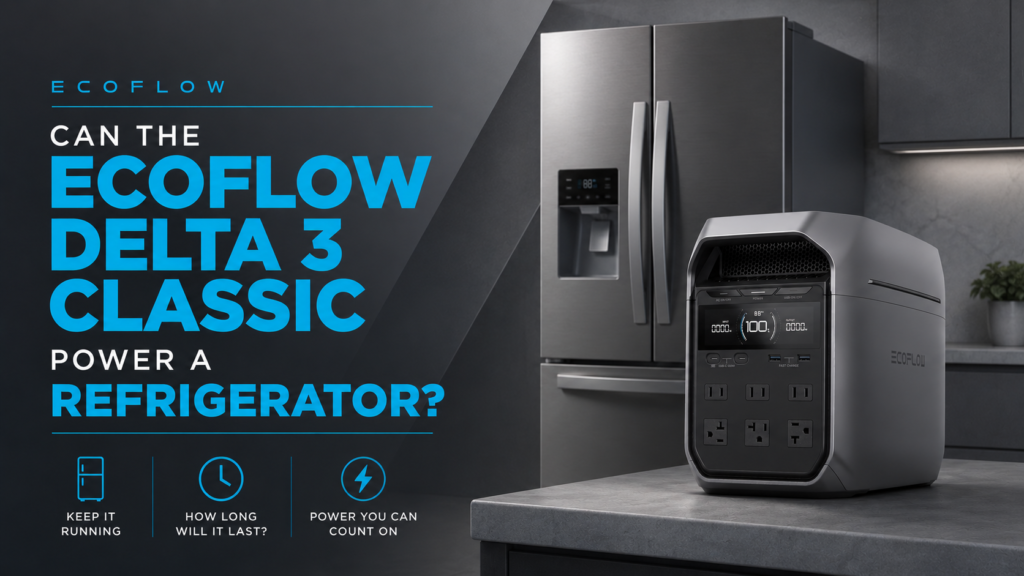
A power outage can quickly turn into an expensive problem if your refrigerator stops running. Spoiled food, melted frozen items, and the inconvenience of losing refrigeration make a reliable backup power source a smart investment. If you’re wondering, can the EcoFlow DELTA 3 Classic power a refrigerator? the short answer is yes—for most household refrigerators, it can.
With a 1,024Wh LiFePO₄ battery, 1,800W continuous AC output, and 3,600W surge capacity, the EcoFlow DELTA 3 Classic is designed to handle the startup surge and continuous power draw of most modern refrigerators. In this guide, you’ll learn how long it can keep a refrigerator running, what affects runtime, and how to maximize backup power during an outage.
Quick Answer
Yes, the EcoFlow DELTA 3 Classic can power most refrigerators.
For a typical Energy Star refrigerator that consumes 60–150 watts while running, you can generally expect 6 to 15 hours of operation, depending on:
- Refrigerator size
- Compressor duty cycle
- Ambient temperature
- How often the door is opened
- Battery charge level
- Power conversion losses
Because refrigerators cycle on and off instead of running continuously, real-world runtime is often longer than many people expect.
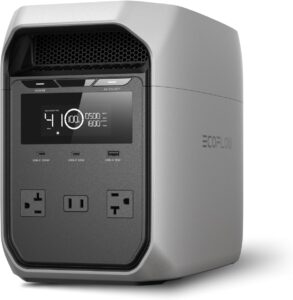
EcoFlow DELTA 3 Classic
Why the EcoFlow DELTA 3 Classic Can Run a Refrigerator
The DELTA 3 Classic combines several features that make it well suited for refrigerator backup.
1. Powerful Inverter
Many full-size refrigerators require a brief surge of power when the compressor starts. Although the running power may only be around 100 watts, startup can temporarily spike several times higher.
The DELTA 3 Classic’s:
- 1,800W continuous output
- 3,600W surge capability
allow it to start and run the vast majority of residential refrigerators without difficulty.
2. LiFePO₄ Battery Technology
Unlike older lithium-ion batteries, the DELTA 3 Classic uses LiFePO₄ (Lithium Iron Phosphate) cells, which are known for:
- Longer cycle life
- Better thermal stability
- Improved safety
- Excellent long-term reliability
These advantages make it an ideal choice for emergency preparedness and frequent backup use.
3. Ultra-Fast Recharging
One feature customers consistently praise is EcoFlow’s exceptionally fast AC charging.
Many owners report charging the battery from nearly empty to full in about one hour, allowing the unit to be ready again quickly after an outage.
This fast recharge is especially valuable during storm seasons when multiple outages can occur within a short period.
How Long Will It Run Your Refrigerator?
Actual runtime depends on your refrigerator’s average power consumption—not its maximum rating.
Here are realistic estimates.
| Refrigerator Running Power | Estimated Runtime* |
|---|---|
| 60W mini fridge | 14–15 hours |
| 80W efficient refrigerator | 10–12 hours |
| 100W standard refrigerator | 8–10 hours |
| 120W larger refrigerator | 7–8 hours |
| 150W older refrigerator | 6–7 hours |
Estimated runtimes assume typical inverter efficiency and normal compressor cycling. Real-world performance varies based on usage and environmental conditions.
If you’re unsure how much electricity your refrigerator actually uses, our guide Understanding Portable Power Station Runtime explains how appliance wattage, battery efficiency, and duty cycles affect runtime calculations.
Real-World Customer Experiences
One reason the DELTA 3 Classic receives consistently positive reviews is that owners use it successfully during real emergencies—not just controlled tests.
Customers frequently report using it to power:
- Kitchen refrigerators
- Garage refrigerators
- Chest freezers
- Mini fridges
- RV refrigerators
- Medical refrigerators
Many owners purchased the unit specifically for:
- Hurricane preparation
- Ice storms
- Extended blackouts
- Remote cabins
- Home emergency backup
Several reviewers also mention running a refrigerator alongside Wi-Fi equipment, lights, laptops, and phone chargers, demonstrating that the DELTA 3 Classic can support multiple essential devices simultaneously when managed carefully.
Another frequently praised feature is the less than 10 ms UPS switchover, allowing some users to leave refrigerators connected continuously so the battery automatically takes over during a power outage without manual intervention.
What Can You Run Alongside a Refrigerator?
A refrigerator usually doesn’t consume the full output capacity of the DELTA 3 Classic, leaving plenty of power available for other essential devices.
For example, many users successfully power combinations such as:
- LED lights
- Internet modem and Wi-Fi router
- Smartphones and tablets
- Laptop computers
- Television
- CPAP machine
- Small fans
However, avoid pairing your refrigerator with high-wattage appliances such as electric heaters, large microwaves, or powerful air conditioners for extended periods, as they will drain the battery much more quickly.
What Affects Refrigerator Runtime?
Although the EcoFlow DELTA 3 Classic has a 1,024Wh battery, actual runtime varies based on several factors. Understanding these variables helps you set realistic expectations and get the most from your backup power station.
1. Refrigerator Size and Efficiency
Newer Energy Star refrigerators typically consume much less electricity than older models. A modern refrigerator may average 60–100 watts, while an older unit can draw 150 watts or more.
As a result, upgrading to an energy-efficient refrigerator can significantly increase runtime during an outage.
2. Compressor Duty Cycle
A refrigerator doesn’t run continuously. Instead, the compressor cycles on and off to maintain the desired temperature.
For example:
- A refrigerator averaging 100W may only run the compressor 30–50% of the time.
- In cooler rooms, the compressor cycles less often.
- During hot weather or frequent door openings, it runs more frequently.
This cycling is why real-world runtimes are often longer than simple battery-capacity calculations suggest.
If you’d like a more accurate estimate for your specific appliance, use our EcoFlow DELTA 3 Classic Runtime Calculator Guide, which walks you through calculating runtime based on actual power consumption.
3. Ambient Temperature
High room temperatures force the compressor to work harder.
To maximize runtime:
- Keep the refrigerator indoors if possible.
- Avoid direct sunlight.
- Limit how often the door is opened.
- Keep the refrigerator reasonably full, as cold food helps stabilize internal temperature.
4. Battery Charge Level
Many owners recommend keeping the DELTA 3 Classic fully charged before storm season.
Customer reviews repeatedly mention that maintaining a full battery provides valuable peace of mind during hurricanes, winter storms, and unexpected outages.
UPS Performance for Refrigerator Backup
One standout feature of the EcoFlow DELTA 3 Classic is its UPS (Uninterruptible Power Supply) functionality.
With a transfer time of less than 10 milliseconds, the unit can automatically switch to battery power when utility power fails.
This offers several benefits:
- Food stays cold without manual intervention.
- The refrigerator compressor experiences minimal interruption.
- You don’t need to rush home during a power outage.
- Sensitive electronics connected alongside the refrigerator remain powered.
Many reviewers even replaced traditional UPS units because the DELTA 3 Classic provides both fast switchover and substantially more battery capacity.
Extending Runtime with Solar Charging
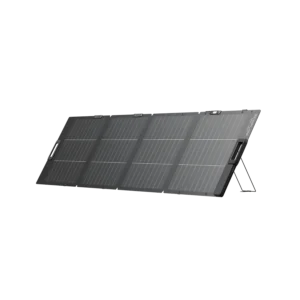
If the outage lasts longer than a single battery charge, solar panels can keep the DELTA 3 Classic running indefinitely under favorable conditions.
220W Bifacial Solar Panel
During sunny weather, solar charging can:
- Recharge the battery while your refrigerator is operating.
- Reduce reliance on the electrical grid.
- Extend backup capability during multi-day outages.
- Support off-grid cabins, RVs, and camping trips.
Before purchasing a solar setup, remember that some users noted the required solar connector may not always be included with the power station.
XT60i Solar Cable

Adding the proper cable before an emergency can save time and frustration when every minute counts.
Recommended Accessories
A few well-chosen accessories can make your refrigerator backup setup more reliable and convenient.
Heavy-Duty Extension Cord
A high-quality extension cord helps position the power station safely while minimizing voltage drop.
Heavy-Duty Extension Cord

Smart Plug with Energy Monitoring
Knowing how much electricity your refrigerator actually consumes is the best way to estimate runtime accurately.
A smart plug with energy monitoring lets you:
- Measure average wattage.
- Track daily energy use.
- Estimate battery runtime more precisely.
- Identify unusually high power consumption.
Smart Plug with Energy Monitoring
Refrigerator Thermometer
Keeping an eye on the internal temperature helps ensure food remains safe during extended outages without opening the door unnecessarily.
Refrigerator Thermometer
EcoFlow 800W Alternator Charger
If you frequently travel in an RV or camper, charging from your vehicle can be extremely useful.
EF ECOFLOW 800W Alternator Charger
Common Mistakes to Avoid
Customer reviews reveal several recurring mistakes that can reduce performance or lead to disappointment.
Assuming Runtime Is Fixed
Runtime depends on the refrigerator’s actual energy consumption, not just battery capacity.
Always estimate using average watts rather than the appliance’s maximum rating.
Forgetting to Fully Charge the Battery
Several owners recommend charging the DELTA 3 Classic immediately after each use so it’s ready for the next outage.
Opening the Refrigerator Too Often
Every time the door opens, warm air enters, forcing the compressor to run longer and consume more energy.
Expecting Unlimited Runtime
Although the DELTA 3 Classic performs impressively, a single 1,024Wh battery has practical limits.
For extended outages, combining the unit with solar charging is often the best solution.
Best Practices for Maximum Runtime
To get the most from your EcoFlow DELTA 3 Classic:
- Keep the battery fully charged, especially before severe weather.
- Test the setup before an actual emergency.
- Monitor power consumption with a smart plug.
- Reduce unnecessary door openings during outages.
- Use solar charging whenever possible.
- Store the power station in a cool, dry location and periodically check its charge level.
- Understand your refrigerator’s power requirements before relying on it as your primary backup solution.
Following these simple practices can significantly extend runtime and improve reliability when the power goes out.
Frequently Asked Questions
Can the EcoFlow DELTA 3 Classic power a full-size refrigerator?
Yes. The EcoFlow DELTA 3 Classic can power most full-size household refrigerators thanks to its 1,800W continuous AC output and 3,600W surge capacity, which are sufficient for the startup surge of most compressor-based refrigerators.
How long can the EcoFlow DELTA 3 Classic run a refrigerator?
Runtime depends on your refrigerator’s average power consumption.
Typical estimates are:
- 60W mini refrigerator: 14–15 hours
- 80W Energy Star refrigerator: 10–12 hours
- 100W refrigerator: 8–10 hours
- 150W older refrigerator: 6–7 hours
Because compressors cycle on and off, actual runtime is often longer than a simple wattage calculation suggests.
Can the EcoFlow DELTA 3 Classic start a refrigerator compressor?
Yes. Most household refrigerators require a brief surge of power when the compressor starts. With a 3,600W surge rating, the DELTA 3 Classic is designed to handle the startup requirements of most residential refrigerators.
Can I leave my refrigerator plugged into the EcoFlow DELTA 3 Classic?
Yes. Many owners use the DELTA 3 Classic as a backup power source thanks to its UPS mode, which switches to battery power in less than 10 milliseconds during an outage.
This helps minimize interruptions and keeps food safely refrigerated.
Can solar panels keep my refrigerator running indefinitely?
Potentially. If your solar panels generate enough energy to replace what the refrigerator consumes each day, you can extend runtime significantly during prolonged outages.
Actual performance depends on:
- Sunlight conditions
- Solar panel size
- Refrigerator energy use
- Weather
- Battery state of charge
Is the EcoFlow DELTA 3 Classic good for emergency preparedness?
Absolutely. Customer reviews consistently highlight its reliability during hurricanes, winter storms, grid failures, and other emergencies. Buyers also praise its fast charging, quiet operation, and dependable UPS functionality for protecting refrigerators and other essential appliances.
What other appliances can I run with a refrigerator?
In many cases, the DELTA 3 Classic has enough capacity to power a refrigerator alongside low-power essentials such as:
- Wi-Fi router
- LED lights
- Smartphones
- Laptop computers
- Television
- CPAP machine
- Fans
Avoid running multiple high-wattage appliances simultaneously if maximizing runtime is your goal.
Final Verdict
So, can the EcoFlow DELTA 3 Classic power a refrigerator? Yes—it can, and it does so exceptionally well for most households.
Its 1,024Wh LiFePO₄ battery, 1,800W continuous inverter, 3,600W surge capability, and fast UPS switchover make it a dependable choice for keeping refrigerators running during power outages. Real-world customer experiences consistently show that it handles refrigerators, freezers, networking equipment, CPAP machines, and other essential devices with ease.
The biggest limitation isn’t its ability to power a refrigerator—it’s the lack of battery expansion. If you expect frequent multi-day outages, pairing the DELTA 3 Classic with a 220W bifacial solar panel is one of the best ways to extend runtime and maintain reliable backup power.
For most homeowners, campers, RV travelers, and emergency preparedness enthusiasts, the EcoFlow DELTA 3 Classic strikes an excellent balance between portability, performance, and convenience.
Affiliate Recommendation
EcoFlow DELTA 3 Classic