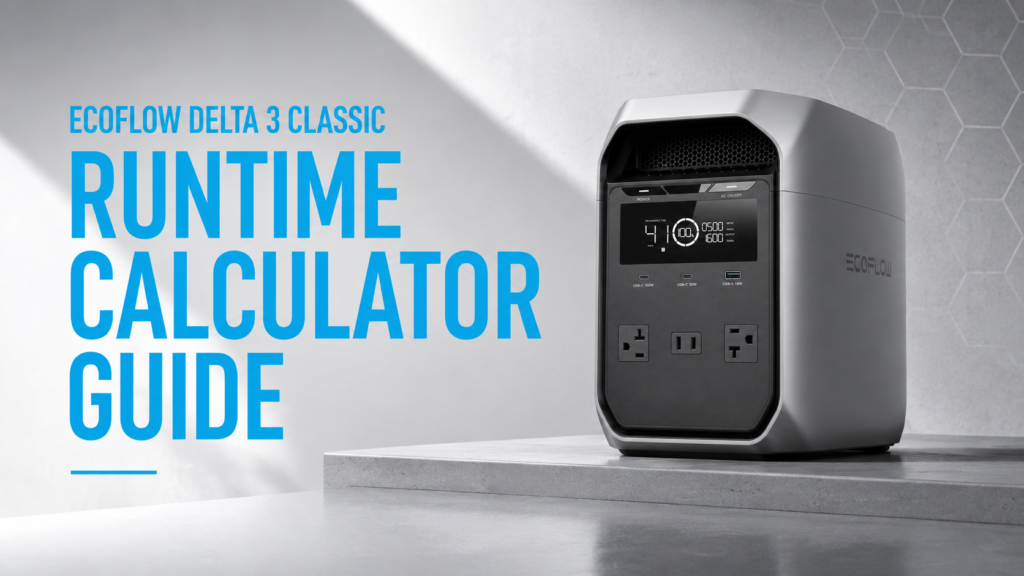
When shopping for a portable power station, one question matters more than almost any other: How long will it actually power my devices? That’s exactly what this EcoFlow DELTA 3 Classic Runtime Calculator Guide is designed to answer.
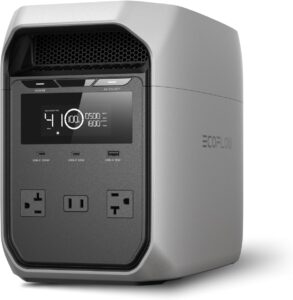
Although the EcoFlow DELTA 3 Classic features a 1024Wh LiFePO4 battery and an 1800W pure sine wave inverter, actual runtime depends on far more than battery capacity alone. Appliance wattage, inverter efficiency, battery temperature, and usage patterns all affect how long your essential equipment will keep running.
Whether you’re preparing for power outages, camping off-grid, protecting medical devices, or planning an RV trip, understanding realistic runtime expectations helps you choose the right backup solution and avoid unpleasant surprises during an emergency.
If you’re still deciding whether this model is the right fit, our EcoFlow DELTA 3 Classic Review After Real Customer Feedback explores how real owners rate its performance, reliability, and everyday usability.
Quick Answer
The EcoFlow DELTA 3 Classic has a 1024Wh battery, but AC-powered appliances typically receive slightly less usable energy because some power is lost during DC-to-AC conversion.
A practical planning formula is:
Estimated Runtime (hours) = Usable Battery Capacity (Wh) ÷ Appliance Power (W)
For many AC appliances, using a planning value of approximately 850–920Wh provides a more realistic estimate than assuming the full 1024Wh is available.
Here are a few common examples:
| Appliance | Average Power | Estimated Runtime |
|---|---|---|
| Wi-Fi Router | 10W | 85–90 hours |
| Laptop | 60W | 14–15 hours |
| LED TV | 100W | 8–9 hours |
| CPAP Machine | 40W | 21–23 hours |
| Household Refrigerator* | 60W average | 14–15 hours |
| Coffee Maker | 1000W | About 50–55 minutes |
Actual refrigerator runtime varies because compressors cycle on and off instead of running continuously.
How the EcoFlow DELTA 3 Classic Runtime Calculator Works
Calculating runtime is straightforward once you know how much electricity your appliance uses. However, the result is always an estimate rather than a guarantee because every device consumes power differently.
Start by finding the appliance’s running wattage, usually printed on its label or listed in the owner’s manual. Avoid using the startup or surge wattage, as that’s only a brief peak when certain appliances first turn on.
Next, divide the estimated usable battery capacity by the appliance’s running wattage.
For example:
- 900Wh ÷ 100W = approximately 9 hours
- 900Wh ÷ 300W = approximately 3 hours
- 900Wh ÷ 1500W = approximately 36 minutes
These calculations provide a good starting point for planning emergency backup or off-grid use.
If you’re unfamiliar with battery calculations, our guide to Understanding Portable Power Station Runtime explains why battery capacity, inverter efficiency, and appliance behavior all influence the final runtime.
For the most accurate estimates, measure the actual power draw of your appliances instead of relying on manufacturer averages. A smart plug with energy monitoring can reveal how much electricity devices really consume over time, especially refrigerators, freezers, and entertainment systems that cycle on and off rather than drawing constant power.
Finally, remember that the DELTA 3 Classic is designed to support essential loads, not an entire household. Customer reviews consistently show the best results when owners prioritize critical devices such as refrigerators, Wi-Fi routers, CPAP machines, laptops, lighting, and communication equipment instead of attempting to power every appliance simultaneously.
Estimated EcoFlow DELTA 3 Classic Runtime for Common Appliances
The table below provides practical runtime estimates for everyday devices. These figures are intended for planning purposes and assume typical AC inverter efficiency. Your actual results may differ depending on ambient temperature, battery condition, appliance cycling, and total connected load.
| Appliance | Typical Running Power | Estimated Runtime |
|---|---|---|
| Wi-Fi Router | 10W | 85–90 hours |
| LED Light | 10W | 85–90 hours |
| Smartphone Charger | 15W | 56–60 hours |
| Laptop | 60W | 14–15 hours |
| Desktop Computer | 200W | 4–4.5 hours |
| LED Television | 100W | 8–9 hours |
| Portable Fan | 50W | 17–18 hours |
| CPAP Machine* | 40W | 21–23 hours |
| Mini Refrigerator | 40W average | 21–23 hours |
| Household Refrigerator** | 60W average | 14–15 hours |
| Coffee Maker | 1000W | About 50–55 minutes |
| Microwave Oven | 1200W | About 40–45 minutes |
| Electric Grill | 1500W | About 30–35 minutes |
CPAP power consumption varies depending on pressure settings, humidifier use, and heated tubing.
Most refrigerators cycle on and off, so their average power draw is much lower than the compressor’s peak wattage.
What Affects EcoFlow DELTA 3 Classic Runtime?
Battery capacity is only one piece of the equation. Several real-world factors determine how long the DELTA 3 Classic can power your equipment.
Appliance Power Consumption
The biggest factor is the device itself.
For example, a 10W internet router can operate for several days, while a 1,500W electric heater may deplete the battery in well under an hour. Running multiple appliances at the same time also increases total power consumption and shortens runtime.
Inverter Efficiency
When using the AC outlets, the DELTA 3 Classic converts stored DC battery power into AC electricity. This conversion isn’t 100% efficient, which is why the usable energy available to AC appliances is lower than the battery’s rated 1024Wh capacity.
USB-powered devices often experience less conversion loss than AC-powered appliances.
Compressor Cycling
Appliances such as refrigerators and freezers don’t run continuously.
Instead, the compressor switches on and off throughout the day. As a result, a refrigerator with a 150W compressor might average only 50–70W over several hours, significantly extending runtime compared to a continuous 150W load.
This explains why customer experiences with refrigerator runtime often differ even when using similar models.
Ambient Temperature
Temperature affects both the battery and the appliance.
During hot weather, refrigerators run more frequently to maintain safe food temperatures, increasing energy consumption. Likewise, extremely cold or hot conditions can reduce battery performance compared to moderate operating temperatures.
Tips to Maximize Runtime
Customer feedback reveals several habits that consistently help owners get more from the DELTA 3 Classic.
Prioritize Essential Devices
Instead of powering everything at once, focus on critical equipment such as:
- Refrigerator
- Wi-Fi router
- Medical devices
- Phones
- LED lighting
- Laptop
This approach can dramatically extend available runtime during emergencies.
Recharge with Solar During the Day
Many owners who purchased the DELTA 3 Classic for storm preparedness or camping later wished they had bought a compatible solar panel from the start.
A 220W Bifacial Solar Panel allows you to recharge the battery whenever sufficient sunlight is available, reducing reliance on grid power during extended outages.
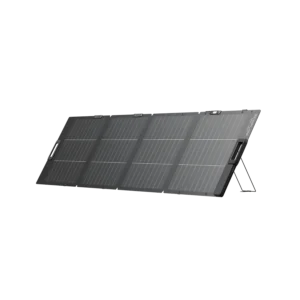
If you plan to use solar charging, remember that many buyers reported the required XT60i Solar Cable was not included with their package, so verify your accessories before your first trip.

Measure Actual Power Usage
One of the most common planning mistakes is estimating instead of measuring.
A smart plug with energy monitoring can show exactly how much electricity compatible appliances consume over several hours or days. This makes your runtime calculations far more accurate than relying on generic wattage estimates.
In addition, monitoring real energy usage may reveal opportunities to reduce consumption and extend backup time during an outage.
Keep the Battery Ready
Many reviewers recommended keeping the DELTA 3 Classic fully charged during storm season and testing it periodically.
Because the unit can recharge quickly from AC power, it’s relatively easy to top up after each use and ensure it’s ready for the next emergency.
For a broader look at choosing accessories, preparing for outages, and selecting the right model, see our Ultimate EcoFlow DELTA 3 Classic Buying Guide.
Helpful Accessories
A few accessories repeatedly appeared in customer feedback because they solve common issues rather than simply adding convenience:
EcoFlow DELTA 3 Classic
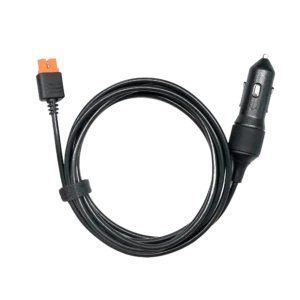
Car Charging Cable for charging while traveling
Heavy-Duty Extension Cord for flexible appliance placement during outages

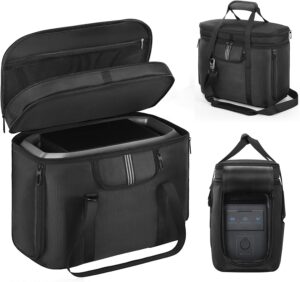
Storage Bag / Organizer to keep cables and accessories together
Refrigerator Thermometer to monitor food-safe temperatures during extended outages
These additions can make emergency preparedness more convenient without changing the core performance of the power station.
Frequently Asked Questions
How accurate is this EcoFlow DELTA 3 Classic runtime calculator?
This guide provides planning estimates, not guaranteed runtimes. Actual results depend on your appliance’s power consumption, inverter efficiency, battery temperature, and whether the device runs continuously or cycles on and off. Measuring your appliance with an energy monitor provides the most accurate estimate.
How long can the EcoFlow DELTA 3 Classic run a refrigerator?
Most modern refrigerators don’t run continuously. If the average power draw is around 60W, you can generally expect about 14–15 hours of runtime under typical conditions. Factors such as room temperature, door openings, and food load can significantly change the result.
Can the EcoFlow DELTA 3 Classic power a CPAP machine overnight?
Yes, many owners report successfully using it for overnight CPAP backup. Runtime depends on the specific machine and whether features like a heated humidifier or heated tubing are enabled. Before relying on it during an emergency, test your own CPAP setup under normal operating conditions.
Can the EcoFlow DELTA 3 Classic replace a UPS?
For many home office and networking applications, it can. The DELTA 3 Classic features less than 10ms UPS switchover, and numerous customers report using it to protect computers, internet equipment, and even refrigerators from short power interruptions. However, always verify compatibility with your specific equipment before depending on it for mission-critical applications.
Is the EcoFlow DELTA 3 Classic expandable?
No. This model does not support expansion batteries, making it one of the most common sources of buyer confusion. If you expect your energy needs to grow in the future, compare expandable models before purchasing.
Does the EcoFlow DELTA 3 Classic include everything needed for solar charging?
Not always. Many customers reported that the XT60i solar cable was sold separately. Check the contents of your package before planning an off-grid trip or emergency backup setup.
Final Verdict
The EcoFlow DELTA 3 Classic Runtime Calculator Guide demonstrates that understanding runtime is about much more than looking at a battery’s rated capacity. While the DELTA 3 Classic offers a 1024Wh LiFePO4 battery, real-world runtime depends on your appliance’s power draw, inverter efficiency, environmental conditions, and how you manage your energy during use.
Based on both the product specifications and recurring customer feedback, the DELTA 3 Classic performs especially well for home emergency backup, camping, RV travel, remote work, and medical equipment support. Owners consistently praise its fast recharge time, quiet operation, reliable UPS function, and ability to power essential devices during outages. At the same time, it’s important to understand its limitations, particularly the lack of battery expansion and the fact that some accessories, such as the XT60i solar cable, may need to be purchased separately.
For the best experience, calculate your expected power needs before buying, test your setup before an emergency, and consider adding accessories that address your specific use case—especially if you plan to use solar charging or rely on the power station for extended outages.
If you’re still deciding whether this model is the right choice, our EcoFlow DELTA 3 Classic Review After Real Customer Feedback provides an in-depth look at real owner experiences, while the Ultimate EcoFlow DELTA 3 Classic Buying Guide compares it with other models in the DELTA lineup. For readers new to portable batteries, Understanding Portable Power Station Runtime explains the key concepts behind battery capacity, efficiency, and runtime calculations.
Authoritative Resources
For additional technical information, specifications, and backup power guidance, consult:
- EcoFlow Product Documentation: https://www.ecoflow.com/
- U.S. Department of Energy – Energy Saver: https://www.energy.gov/energysaver
- ENERGY STAR – Appliance Energy Information: https://www.energystar.gov/
- National Weather Service – Emergency Preparedness: https://www.weather.gov/
- Ready.gov – Power Outage Preparedness: https://www.ready.gov/power-outages