
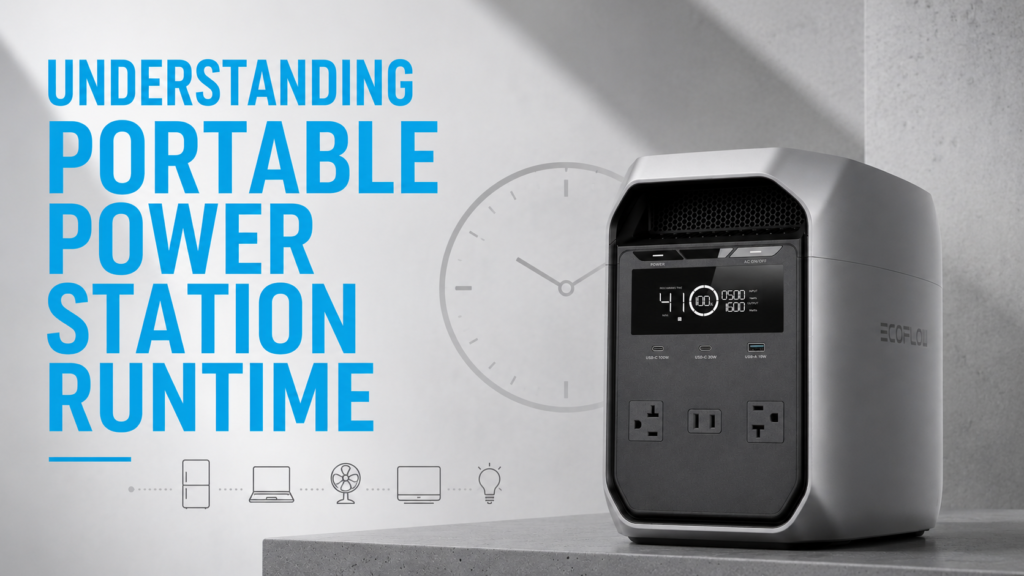
Have you ever wondered why two people with the same portable power station report completely different battery life? That’s where understanding portable power station runtime becomes essential. While manufacturers advertise battery capacity in watt-hours (Wh), real-world runtime depends on several variables, including appliance power consumption, inverter efficiency, temperature, and usage habits.
Whether you’re buying a power station for home backup, camping, RV travel, or emergency preparedness, learning how runtime works helps you choose the right model and set realistic expectations. In this guide, you’ll learn how runtime is calculated, what factors influence battery life, common mistakes to avoid, and practical tips to get the most from your portable power station.
Quick Answer
Portable power station runtime is the amount of time a battery can power one or more devices before it needs recharging.
A simple estimate is:
Runtime (hours) = Usable Battery Capacity (Wh) ÷ Device Power (W)
For example:
- A 900Wh usable battery powering a 90W television may last around 10 hours.
- The same battery powering a 900W microwave may last about 1 hour.
However, this is only an estimate. Actual runtime changes depending on inverter efficiency, battery temperature, appliance behavior, and the total electrical load.
What Is Portable Power Station Runtime?
Portable power station runtime refers to how long the stored battery energy can operate connected devices before the battery is depleted.
Battery capacity is measured in watt-hours (Wh). A higher Wh rating generally means longer runtime, but it doesn’t tell the whole story.
For example:
- A 1024Wh power station does not automatically provide 1,024Wh of usable AC power.
- Some energy is consumed during the conversion from DC battery power to AC household electricity.
This is why two products with similar battery capacities can deliver slightly different real-world runtimes.
If you’re curious how this applies to a specific model, our EcoFlow DELTA 3 Classic Runtime Calculator Guide explains how to estimate runtime for common household appliances using practical examples.
Why Understanding Portable Power Station Runtime Matters
Knowing how runtime works helps you choose a power station that matches your actual needs rather than relying on marketing claims.
For example, someone preparing for occasional power outages may only need enough battery capacity to keep a refrigerator, Wi-Fi router, and a few lights running for several hours. On the other hand, an RV traveler or off-grid camper may need a larger battery that can be recharged daily with solar panels.
Understanding runtime also helps you:
- Compare different power stations fairly.
- Avoid purchasing more capacity than you need.
- Estimate how long essential appliances will operate.
- Prepare more effectively for emergencies.
- Plan solar charging requirements.
- Reduce the risk of unexpected battery depletion.
As a result, you’re more likely to invest in a system that fits both your budget and your energy requirements.
How Portable Power Station Runtime Is Calculated
At its simplest, runtime depends on two numbers:
- Usable battery capacity
- Average power consumption of the connected device
The basic formula is:
Runtime = Usable Battery Capacity ÷ Appliance Wattage
Let’s look at a few examples.
| Battery Capacity | Appliance | Power Draw | Estimated Runtime |
|---|---|---|---|
| 900Wh | Wi-Fi Router | 10W | About 90 hours |
| 900Wh | Laptop | 60W | About 15 hours |
| 900Wh | Television | 100W | About 9 hours |
| 900Wh | Refrigerator (average) | 60W | About 15 hours |
| 900Wh | Coffee Maker | 1000W | About 54 minutes |
These calculations provide a useful starting point, but they don’t account for every real-world variable.
Why the Advertised Battery Capacity Isn’t the Whole Story
One of the biggest misconceptions is assuming that a 1,000Wh battery delivers exactly 1,000Wh through its AC outlets.
In reality, several factors reduce the usable energy available to your appliances.
Inverter Efficiency
Most household devices use AC electricity, while the battery stores DC power.
The power station’s inverter converts DC to AC, and this conversion isn’t perfectly efficient. Some energy is always lost as heat during the process.
USB and DC outputs generally experience fewer conversion losses than AC outlets.
Appliance Behavior
Not every appliance draws a constant amount of power.
For example:
- Refrigerators cycle on and off.
- CPAP machines may consume different amounts of power depending on settings.
- Space heaters usually draw a constant high load.
- Laptop chargers reduce power consumption once the battery approaches full charge.
Because of these changing power demands, actual runtime often differs from simple calculations.
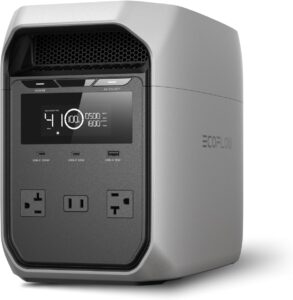
If you’re considering the EcoFlow DELTA 3 Classic, our EcoFlow DELTA 3 Classic Review After Real Customer Feedback discusses how real owners experienced battery life across home backup, camping, and emergency use.
Factors That Affect Portable Power Station Runtime
Even if two people own the same power station, they may see very different runtimes. That’s because battery life depends on several real-world conditions.
1. Total Power Consumption
The more watts your devices use, the faster the battery drains.
For example:
- LED light: 10W
- Laptop: 60W
- Refrigerator (average): 60–120W depending on cycling
- Coffee maker: 900–1,200W
- Electric heater: 1,500W
Running multiple devices at the same time adds their power consumption together, reducing runtime accordingly.
2. Battery Capacity
Larger batteries generally provide longer runtimes.
For instance:
- 500Wh battery → suitable for charging electronics and running small devices.
- 1,000Wh battery → a good balance for home backup, camping, and RV use.
- 2,000Wh+ battery → better suited for extended outages or powering several appliances simultaneously.
However, more capacity also means more weight, higher cost, and longer charging times, so bigger isn’t always better.
3. Inverter Losses
Whenever you use AC outlets, the inverter converts stored DC power into household AC electricity.
Because this conversion isn’t 100% efficient, some energy is lost. As a result:
- AC-powered appliances usually have shorter runtimes than simple Wh calculations suggest.
- USB and DC outputs are generally more energy-efficient.
4. Temperature
Battery performance changes with temperature.
Cold weather can temporarily reduce available capacity, while extremely hot conditions may cause the cooling system to run more often, consuming additional power.
Manufacturers typically recommend operating portable power stations within their specified temperature range for the best performance and battery longevity.
5. Device Startup Surges
Some appliances briefly require much more power when they start.
Examples include:
- Refrigerators
- Freezers
- Air compressors
- Power tools
Although the running wattage may be modest, the startup surge can be several times higher. A power station must be able to handle both the surge and the continuous load.
Common Runtime Mistakes to Avoid
Many disappointing experiences come from unrealistic expectations rather than faulty equipment.
Here are the most common mistakes.
Assuming the Advertised Battery Capacity Is Fully Usable
The rated battery capacity is an excellent comparison tool, but it doesn’t represent the exact amount of AC energy available after conversion losses.
Ignoring Appliance Duty Cycles
Some devices don’t run continuously.
A refrigerator, for example, cycles its compressor on and off throughout the day. This means it usually consumes far less energy over 24 hours than its maximum running wattage suggests.
Overlooking Standby Consumption
Some power stations consume a small amount of energy simply by remaining powered on.
Leaving AC outputs enabled overnight—even when nothing is plugged in—can slightly reduce available battery capacity.
Forgetting Solar Recharge
During multi-day outages or extended camping trips, runtime isn’t limited to the battery alone.
Adding solar charging allows you to replenish energy during daylight hours, greatly extending usable operating time.
Many users who initially skipped solar panels later reported wishing they had purchased them from the start.
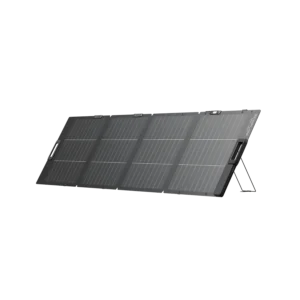
For portable systems like the EcoFlow DELTA 3 Classic, this panel pairs naturally with the unit:
If you’re charging with solar, you’ll also need the correct connection cable for compatible setups:

Best Practices for Maximizing Runtime
Getting longer battery life isn’t just about buying a larger power station. Small changes in how you use your equipment can make a noticeable difference.
Some practical tips include:
- Prioritize essential appliances during outages instead of powering everything at once.
- Charge laptops and phones during daylight hours if you’re using solar panels.
- Monitor real-time power consumption through your power station’s display or mobile app.
- Reduce unnecessary standby loads by switching off unused AC outputs.
- Keep the battery charged before storm season or planned trips.
- Test your backup setup before relying on it in an emergency.
- Know your appliances’ actual wattage instead of relying on estimates.
A smart energy monitor can also help identify which appliances consume the most electricity, making runtime planning much easier.
Real-World Example
Imagine you’re preparing for an overnight power outage.
Your essential devices include:
- Refrigerator
- Wi-Fi router
- LED lamp
- Phone charger
Instead of focusing on each appliance individually, calculate the combined average power draw and compare it with your battery’s usable capacity.
This approach gives a much more realistic estimate than simply looking at the battery’s advertised watt-hour rating.
If you’re still deciding whether a 1,024Wh power station is the right size, our Ultimate EcoFlow DELTA 3 Classic Buying Guide explains which types of users benefit most from this capacity and when it makes sense to choose a larger model instead.
Frequently Asked Questions
What is the best way to calculate portable power station runtime?
The simplest method is:
Runtime (hours) = Usable Battery Capacity (Wh) ÷ Average Device Power (W)
Keep in mind that this provides an estimate. Real-world runtime can vary because of inverter efficiency, battery temperature, and how your appliances consume power.
Why doesn’t my portable power station last as long as the advertised capacity suggests?
The advertised battery capacity represents the energy stored in the battery. When using AC outlets, some energy is lost during the conversion from DC battery power to AC electricity. In addition, many appliances have varying power demands, which can shorten or extend actual runtime.
Can solar panels extend portable power station runtime?
Yes. Solar panels don’t increase the battery’s capacity, but they recharge the battery while you’re using it, allowing you to power devices for much longer during extended outages, camping trips, or off-grid use.
Does appliance startup power affect runtime?
Indirectly, yes. Appliances such as refrigerators, freezers, and power tools often require a brief surge of power when starting. While this doesn’t necessarily reduce runtime significantly, your power station must be capable of handling both the startup surge and the continuous running wattage.
Does a higher watt-hour battery always mean better runtime?
Generally, yes. A larger battery stores more energy and can run devices for longer. However, larger models are also heavier, more expensive, and may take longer to recharge. Choosing the right capacity depends on your intended use rather than simply buying the biggest battery available.
How can I improve portable power station runtime?
You can extend runtime by:
- Running only essential appliances.
- Using energy-efficient devices whenever possible.
- Charging with solar during the day.
- Turning off unused AC outputs.
- Monitoring your power consumption.
- Keeping the battery fully charged before emergencies.
Final Verdict
Understanding portable power station runtime is one of the most important skills for choosing and using a backup battery effectively. While battery capacity is a useful starting point, real-world runtime depends on factors such as appliance wattage, inverter efficiency, temperature, and your overall power usage.
Instead of relying solely on manufacturer estimates, calculate your expected energy needs and compare them with the usable capacity of the power station you’re considering. This approach helps you avoid buying too little—or paying for more capacity than you’ll actually use.
If you’re evaluating a 1,024Wh system, the EcoFlow DELTA 3 Classic is a strong option for home backup, camping, RV travel, and emergency preparedness. Customer feedback consistently highlights its fast charging, reliable UPS performance, quiet operation, and dependable backup power. However, it’s important to understand its limitations, particularly the lack of battery expansion, before making a purchase.
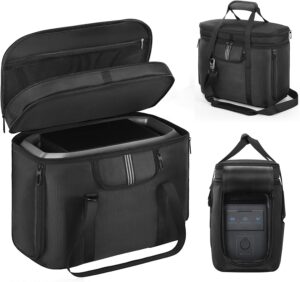
If you’re ready to build a complete backup setup, these accessories can improve convenience and efficiency:

Authoritative Sources
- EcoFlow Product Documentation: https://www.ecoflow.com/
- U.S. Department of Energy – Energy Saver: https://www.energy.gov/energysaver
- ENERGY STAR: https://www.energystar.gov/
- National Renewable Energy Laboratory (NREL): https://www.nrel.gov/


