
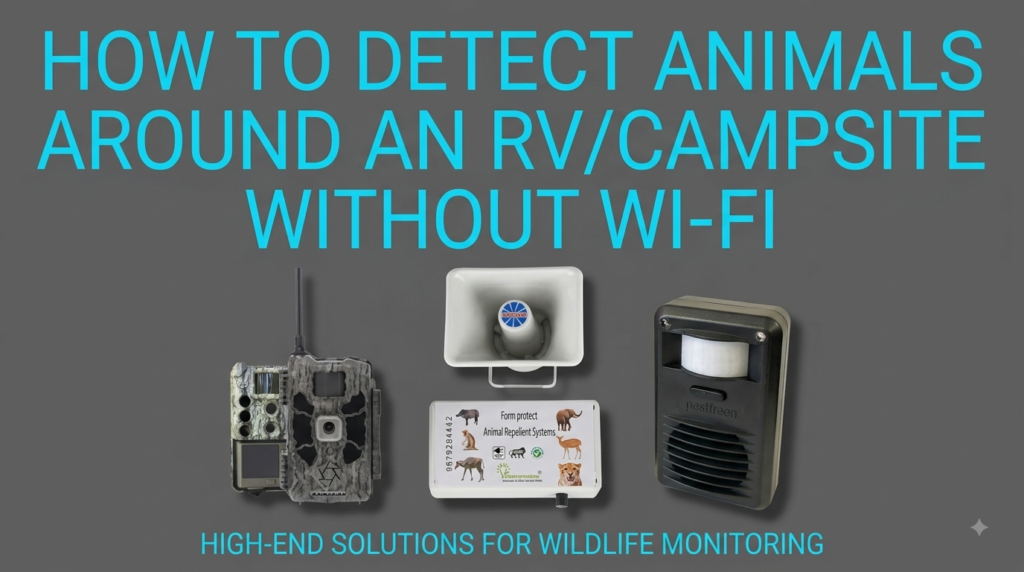
If you’re wondering how to detect animals around an RV at night without Wi-Fi, you have probably already discovered the problem with relying on cameras or app-based security. Remote campsites can have weak cellular service, no Wi-Fi, darkness, dense vegetation, and wildlife moving around when everyone is asleep.
You may hear something outside and wonder whether it is a raccoon near the cooler, a coyote approaching the campsite, or simply a branch moving in the wind. By the time you know for certain, the animal may already be close to your RV, food, or camping equipment.
That is why an offline RV animal alert system can make more sense than another Wi-Fi camera. Instead of sending video through the internet, a local perimeter detector can watch an area and alert you directly when movement enters its detection zone.
For this particular use case, the LETWESAF portable radar perimeter alarm is especially interesting because it was designed around exactly this kind of off-grid environment.
Quick Answer: How Can You Detect Animals Around an RV Without Wi-Fi?

The simplest approach is to use an offline perimeter motion detector around the area you want to monitor.
The LETWESAF Radar Perimeter Security Alarm uses 24GHz millimeter-wave radar to detect movement and communicates directly with its receiver, so it does not require Wi-Fi or an app. The manufacturer says the system is designed for campsites and RVs, supports adjustable detection zones, is IP66-rated, and can operate for up to 48 hours on its built-in battery under stated conditions.
That makes it a particularly good fit when your RV is parked somewhere remote and you want an alert without depending on internet connectivity.
The Problem With Detecting Wildlife Around an RV at Night
The problem isn’t necessarily that you need to identify exactly which animal is outside.
What you really need is early awareness.
At night, your visibility is limited. You might be sleeping inside the RV while animals move around the chairs, cooler, trash, food storage, or campsite perimeter.
And if you’re camping somewhere without reliable connectivity, a Wi-Fi camera may not solve the problem at all.
Even when you have a camera, you may still need to check a phone screen to understand what triggered it. A local perimeter alarm takes a different approach: it tells you that movement has entered the area you’re monitoring.
That can be useful for wildlife such as raccoons, coyotes, deer, squirrels, rabbits, and other animals reported by users of this type of system.
The goal isn’t to create an impenetrable barrier around your RV. Instead, you’re creating an early-warning zone.
What an RV Animal Alert System Without Wi-Fi Needs
A useful system for remote camping needs to solve several problems at once.
It should work without internet
This is probably the most important requirement.
If you’re camping somewhere with no Wi-Fi or unreliable cellular coverage, your animal detector shouldn’t become useless. LETWESAF specifically advertises offline operation without Wi-Fi or an app.
It should work in darkness
Wildlife doesn’t wait for daylight.
Because the LETWESAF system uses radar rather than a conventional camera image, it is designed to detect movement in darkness. The manufacturer also says the radar can operate through tents, bushes, and light obstacles.
It should survive outdoor conditions
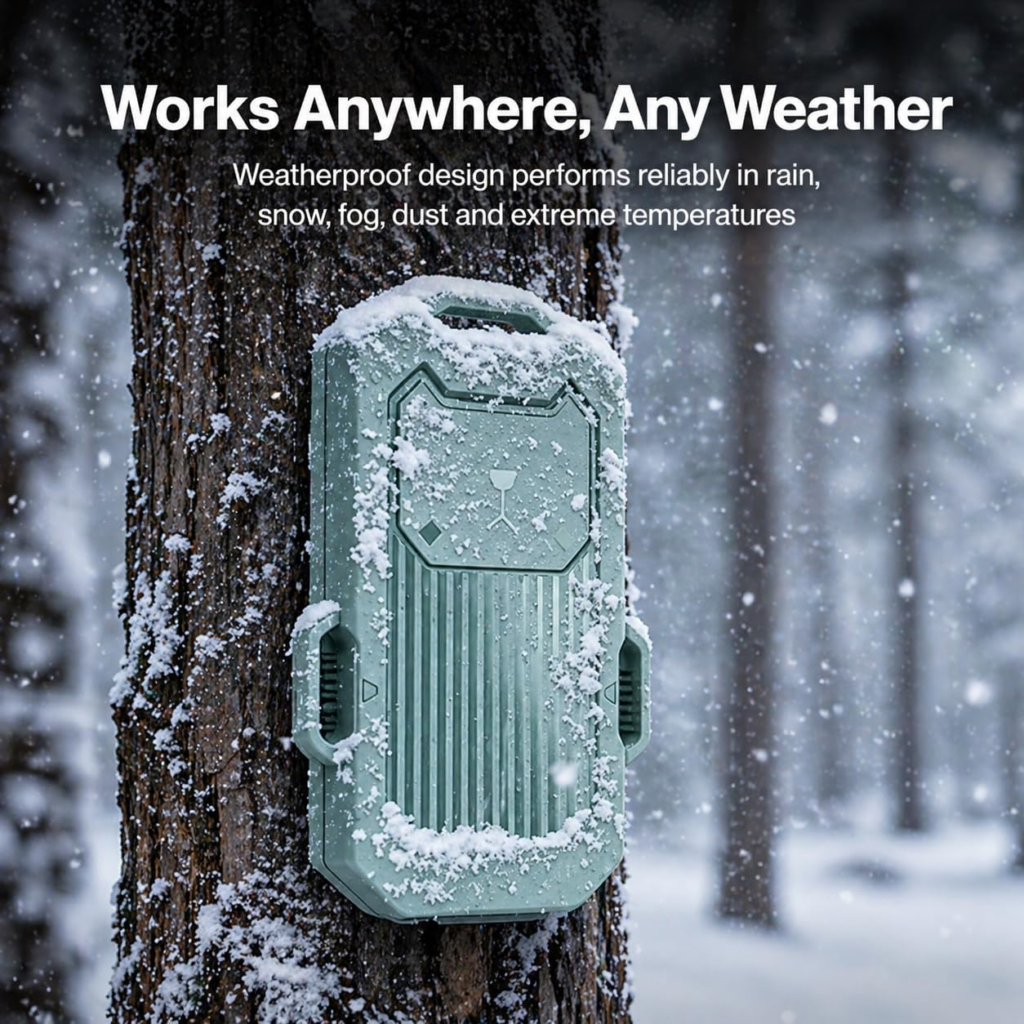
An RV campsite can mean rain, humidity, dust, fog, and changing weather.
The detector is IP66-rated according to the manufacturer, making outdoor weather resistance one of its intended characteristics.
It needs enough coverage for your campsite
One sensor isn’t necessarily enough for a large RV setup.
The standard kit includes one radar detector and one receiver, while the system can be expanded to as many as six sensors.
That matters because your RV may have several approach directions.
How the LETWESAF Radar Alarm Detects Animals
This is where the product becomes more interesting than a basic motion light.
The LETWESAF system uses 24GHz millimeter-wave radar. Rather than detecting body heat like a typical PIR sensor, radar detects movement.
According to the manufacturer, the detection zone can be adjusted from approximately 17 × 20 feet up to 50 × 20 feet, while the receiver can communicate with the sensor from up to 0.5 mile in suitable conditions. Those are different measurements: the first describes the monitored detection area, while the second is the wireless communication distance between the detector and receiver.
That distinction is important.
You don’t need to place the sensor half a mile away from the RV. Instead, you position the detector where you want to monitor an approach path, while keeping the receiver with you inside or near the RV.
For example, imagine your RV is parked beside a wooded area.
You could position the detector toward the side where wildlife is most likely to approach. If something enters the configured detection zone, the receiver can alert you.
Now you’re not depending on a phone notification arriving over a network.
You’re using a local alarm system.
What Using It Around an RV Could Look Like
Picture a typical remote campsite.
You’ve parked the RV, set up your chairs, cooler, and outdoor cooking area, and settled in for the evening. There is no Wi-Fi, and cellular service is unreliable.
During the night, you hear movement outside.
Without a detection system, you have limited information. You might look through a window, turn on a light, or simply wait and hope the noise disappears.
With a perimeter detector positioned around the campsite, you have another layer of awareness.
If an animal enters the monitored area, the receiver can alert you.
One customer specifically reported using this system around an RV site to monitor the area near chairs, a cooler, and storage bins. Other reviewers described using it for wildlife including raccoons and coyotes.
That is the hidden value of the product: you aren’t necessarily trying to “secure an RV” in the traditional sense.
You’re trying to know when something has entered your outdoor living space.
Why Radar Can Be Useful Around an RV
Outdoor environments are messy.
There can be trees, bushes, tents, chairs, vehicles, and camping equipment between the detector and whatever is moving.
A camera requires a useful view of the subject. A conventional motion sensor can also have problems depending on its detection method and placement.
Radar provides a different option.
The manufacturer says the LETWESAF radar can detect movement through light obstacles and in low-visibility conditions.
However, this doesn’t mean it is immune to false alarms.
Several reviewers reported that vegetation and environmental movement can still cause unwanted triggers, particularly when the sensor is positioned poorly or used in windy conditions.
Therefore, placement matters.
Start with a relatively clear detection zone. Test the system before going to sleep, adjust the detection distance, and avoid pointing it directly at constantly moving branches.
That small amount of setup can make the difference between useful alerts and an alarm that you eventually ignore.
Is an Offline Radar Alarm Worth It for RV Camping?
If your biggest problem is simply knowing when wildlife is approaching your RV or campsite—and you often camp without reliable internet—the product’s design makes a lot of sense.
You don’t need a camera pointed at the darkness.
You don’t need a cloud subscription.
You don’t need Wi-Fi.
You get a portable detector, a receiver, and a local alert system designed specifically for outdoor environments. The manufacturer also lists a rechargeable 3,000mAh battery with up to 48 hours of stated operation and solar-charging support.
Who Should Consider It — And Who Shouldn’t
This is a strong option for campers who regularly spend nights in remote locations.
It makes the most sense for:
- RV campers in remote areas
- Boondockers without Wi-Fi
- Campers dealing with frequent wildlife activity
- Families who want extra awareness around an RV
- People camping where cellular service is unreliable
- Hunters, hikers, and other off-grid outdoor users
However, it isn’t necessarily for everyone.
If you only camp at developed RV parks with reliable internet, a conventional camera may provide more information because you can actually see what triggered the alert.
Likewise, if you need silent smartphone notifications, this audible local alarm may not be the right system.
And remember: an animal detector is an alerting device, not a wildlife deterrent or a substitute for proper food storage and campsite practices.
Important Things to Check Before Buying
1. Check the coverage you actually need
The standard kit comes with one detector. If you want to monitor several sides of a large RV or campsite, additional sensors may be necessary. The system supports expansion up to six sensors.
2. Test the placement
Don’t assume the first location will be perfect.
Walk through the detection zone yourself. Watch for vegetation, branches, vehicles, and other objects that could create unwanted triggers.
3. Consider battery life
The manufacturer states up to 48 hours of battery operation, but real-world runtime can depend on usage and conditions. Fully charge the unit before a trip and consider its solar-charging capability if you plan to stay off-grid longer.
4. Understand what the alarm tells you
An alert means movement was detected. It does not necessarily mean a dangerous animal is approaching.
That’s actually one of the reasons testing and sensible placement are important.
FAQs
How do I detect animals around an RV at night without Wi-Fi?
Use an offline perimeter motion detector that communicates directly with a local receiver. A radar-based system such as LETWESAF can detect movement without requiring Wi-Fi or an app.
What is the best RV animal alert system without Wi-Fi?
For campers who want portable perimeter detection, a radar alarm is worth considering because it can provide local alerts without depending on an internet connection. LETWESAF is specifically marketed for camping and RV environments.
Can the LETWESAF radar detect raccoons and coyotes?
Customer reviews report successful detection of various animals, including raccoons and coyotes. Actual detection will depend on the animal, distance, positioning, and environmental conditions.
Does an RV animal alarm need cellular service?
Not necessarily. The LETWESAF system is designed to operate offline, with communication between the detector and receiver rather than through Wi-Fi or cellular service.
Can radar detect animals through bushes?
The manufacturer says its 24GHz radar can work through bushes and light obstacles. However, dense or constantly moving vegetation can still affect performance, so careful placement is recommended.
How far does the LETWESAF detector detect movement?
The manufacturer lists an adjustable detection area ranging from approximately 17 × 20 feet to 50 × 20 feet. It separately lists up to 0.5 mile of wireless communication range between the detector and receiver under suitable conditions.
How many sensors can the system use?
LETWESAF says the system can connect up to six sensors, allowing campers to expand coverage around a larger RV or campsite.
Final Verdict
If you’re searching for how to detect animals around an RV at night without Wi-Fi, the biggest thing to understand is that you don’t necessarily need another camera.
You need local awareness.
When you’re boondocking or camping somewhere remote, an internet-dependent security device can be a poor fit. The LETWESAF radar perimeter alarm takes the opposite approach: the detector monitors movement locally and communicates with its receiver without requiring Wi-Fi.
That makes the product particularly compelling for the camper who wants to know when something is moving toward the RV, chairs, cooler, storage bins, or campsite perimeter while everyone is asleep.
The customer feedback makes the RV use case even more convincing. One reviewer specifically described using the system around an RV site to monitor the area near their outdoor gear, while other users reported detecting wildlife such as raccoons, coyotes, deer, squirrels, and rabbits.
There are limitations. You need to position the sensor carefully, vegetation can sometimes cause unwanted triggers, and a single-sensor package may not provide complete coverage around a large RV. If you want smartphone video or silent remote notifications, a connected camera may still be better.
But if your priority is offline animal detection around an RV or campsite, the product fits the problem unusually well.
Instead of waking up and wondering what is making noise outside, you can have a dedicated perimeter detector watching the area while you sleep.
If reliable offline awareness is exactly what you’re looking for, this is the type of RV animal alert system worth checking.


