
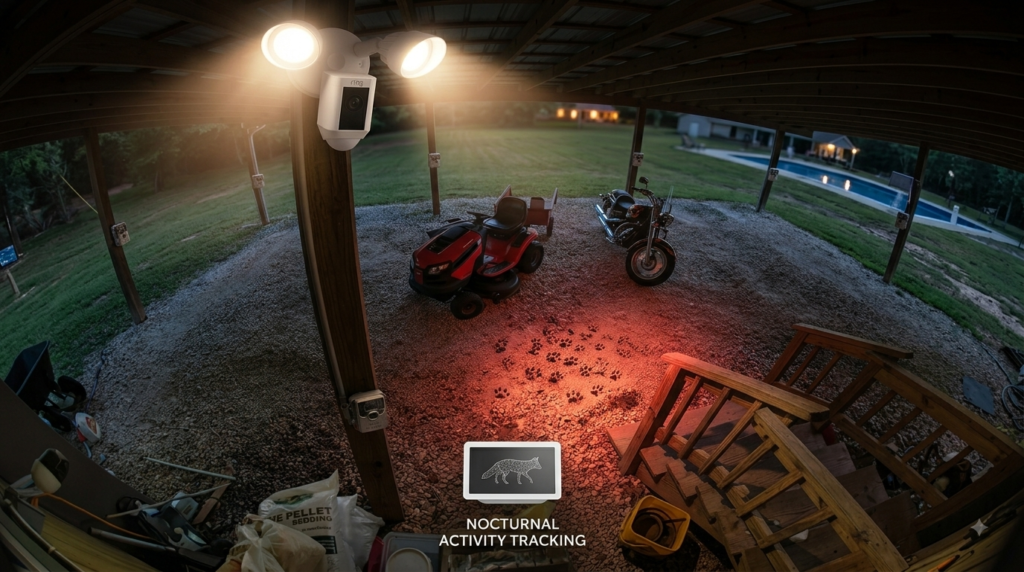
If you’ve ever wondered how to know what animals enter your yard at night, you’re probably familiar with the clues they leave behind.
Maybe plants are damaged in the morning. Something keeps digging through the garden. You hear movement outside but can’t see anything through the window. Or you keep finding tracks and have no idea whether you’re dealing with a raccoon, deer, fox, stray cat, or something else.
The frustrating part is that most nighttime wildlife activity happens when you’re not watching.
You could sit by the window waiting for something to appear, but that’s hardly practical. A better approach is to let a motion-detecting outdoor camera watch the area for you.
That’s exactly where the Ring Floodlight Cam Wired Plus becomes interesting. Customer reviews describe homeowners discovering deer, raccoons, cats, foxes, and even a large bear entering areas around their properties. One reviewer said replacing an outdoor light with the Ring camera revealed how much wildlife was passing through the side yard every night.
So rather than asking whether the Ring can “keep deer away,” the more useful question is:
Can it help you figure out what’s actually visiting your yard at night?
Quick Answer: Is the Ring Floodlight Cam Good for Identifying Nighttime Animals?

Yes—if your goal is to see and monitor nighttime activity, the Ring Floodlight Cam Wired Plus is a compelling option.
It combines an outdoor camera, motion detection, floodlighting, and remote viewing. That means you don’t have to guess what made the noise outside. When movement is detected, you can potentially receive an alert, open the app, and see what is happening.
Customer reviews support this use case particularly well. One homeowner said their camera revealed deer, raccoons, cats, and a fox passing through their side yard at night. Another review described the system alerting the homeowner when a roughly 300-pound bear came up the driveway.
The Problem: Something Is Visiting Your Yard, But What?
The hardest part of nighttime wildlife isn’t always stopping it.
Sometimes, you first need to know what you’re dealing with.
A raccoon and a fox require very different considerations from a neighbor’s dog. Deer might be browsing plants. A cat could simply be passing through. Something larger could be moving along a driveway or property boundary.
Without seeing the animal, you’re working from guesses.
You might find footprints, disturbed soil, damaged plants, or overturned trash the next morning. However, those clues don’t always tell you exactly when the animal arrived or which direction it came from.
That’s why a camera changes the problem.
Instead of asking, “What keeps coming into my yard?” you can potentially answer:
- What animal is it?
- What time does it arrive?
- Where does it enter?
- How long does it stay?
- Does it return repeatedly?
- Is it alone or with other animals?
One customer described being surprised by how many creatures were moving through their property after replacing an existing outdoor light with a Ring Floodlight Cam.
What a Good Wildlife-Monitoring Setup Needs
If you’re trying to identify animals at night, a useful setup needs more than just a camera.
Nighttime visibility matters. An animal moving through a completely dark yard can be difficult to identify.
Motion detection matters. You don’t want to manually watch hours of empty footage.
A wide enough viewing area matters. Wildlife doesn’t necessarily walk directly toward the camera.
Remote access matters. The whole point is to monitor the yard without standing outside at midnight.
And finally, recording matters if you want to look back at an event rather than having to catch it live.
The Ring Floodlight Cam brings these functions into one outdoor device.
How the Ring Floodlight Cam Helps You Identify Nighttime Visitors
The most useful feature combination here is simple:
Movement → detection → illumination → video → remote viewing.
When something enters the monitored area, motion detection can alert the system. The floodlights can illuminate the scene, while the camera provides footage you can review.
That makes a significant difference when you’re trying to distinguish between animals.
One reviewer described the camera as covering a large backyard, with the floodlights putting the area “on full display.” The same reviewer also used AI-generated descriptions and found them detailed enough to help describe activity outside.
Another customer described AI-generated descriptions identifying animals, including a brown squirrel moving along a deck railing, although they also noted that the system could sometimes confuse cats and dogs.
That’s an important distinction: AI descriptions can be useful clues, but you shouldn’t treat them as infallible wildlife identification.
The actual video is still the important evidence.
What Could a Night With the Camera Look Like?
Imagine hearing something outside at 2:15 a.m.
Normally, you’d have two choices: ignore it or get up and investigate.
With an outdoor camera covering the area, the situation can be different.
Motion is detected. The yard lights up. The camera captures the activity. Your phone receives an alert if your settings call for one.
You check the footage.
Instead of wondering whether the noise was caused by a person, dog, raccoon, or deer, you can actually see what entered the yard.
Then imagine it happening again the next night.
You can start building a pattern.
Perhaps the deer consistently appears around the same time. Maybe raccoons approach from the side of the house. Perhaps the fox crosses the same section of lawn repeatedly.
That’s the real value here.
You’re turning a mystery into observable information.
Why a Floodlight Camera Makes More Sense Than a Camera Alone
A conventional outdoor camera can record nighttime activity, but lighting can make the scene easier to see.
That’s one reason customers repeatedly mention the combination of bright lighting and nighttime video quality. One reviewer said the night video was good to very good and became close to daytime quality when the camera’s light was added.
Another reviewer said the floodlights could cover an entire yard and praised the camera’s image quality during both day and night.
For wildlife monitoring, that combination is useful because you don’t just want a notification saying motion detected.
You want to know what caused it.
If you’re tired of finding evidence of nighttime visitors without ever seeing the animal responsible, this is where a floodlight camera starts to make practical sense.
It gives you a way to watch the area remotely and turn nighttime movement into something you can actually investigate.
What You Should Know Before Buying
The Ring Floodlight Cam isn’t perfect, and some limitations matter for this particular use.
Wi-Fi Coverage Is Important
The camera depends on a wireless connection for its connected features. Customers have reported both good long-range performance and frustrating connection problems, so check the Wi-Fi signal where you intend to install it.
Motion Detection Can Pick Up Too Much
Wildlife monitoring can create an interesting problem: you may actually want to detect small animals, but that can also mean more alerts.
One customer reported leaves triggering motion repeatedly, while another described the sensitivity as very responsive to animals.
So expect to spend some time adjusting the detection area and sensitivity.
AI Identification Isn’t Perfect
AI-generated descriptions can make activity easier to understand, but customer feedback shows that animal identification isn’t always accurate. One reviewer specifically mentioned confusion between cats and dogs.
Use the descriptions as an additional clue, not as scientific identification.
You’ll Need the Right Mounting Position
The camera needs a useful view of the area where animals actually pass.
Under-eave installations can also limit how freely the lights can be positioned, according to customer feedback.
Recording Costs May Apply
Customer reviews also mention subscription requirements associated with storing and accessing recorded footage. If reviewing past wildlife activity is important to you, check the current Ring plan options before buying.
FAQs
How can I know what animals enter my yard at night?
An outdoor motion-detecting camera can record nighttime activity and let you review what entered the property. A floodlight can also make the animal easier to see.
Can a Ring camera identify animals at night?
It can capture nighttime animal activity, and some customer reviews mention AI-generated descriptions of activity. However, those descriptions aren’t always accurate, so the recorded video remains the best way to determine what actually entered your yard.
Can the Ring Floodlight Cam see deer at night?
Customer evidence indicates that Ring floodlight cameras have been used to observe deer moving through yards at night. One homeowner specifically reported discovering deer, raccoons, cats, and a fox after installing one.
Can it detect raccoons and foxes?
Yes, the camera can detect movement from animals, and customer feedback specifically mentions raccoons and a fox appearing in nighttime footage.
Can I monitor my yard from my phone?
Customer reviews describe receiving motion notifications and viewing activity remotely through the Ring app.
Will the floodlights help me see animals at night?
The floodlights can illuminate the monitored area when configured appropriately. Customers have described them as bright enough to put large portions of yards and driveways into view.
Can a Ring camera tell me exactly which animal is outside?
Not reliably in every situation. AI-generated descriptions may help, but customer feedback shows that the system can confuse similar animals. It’s better to use the description as a clue and inspect the actual footage.
Is this better than simply installing an outdoor light?
If your goal is only illumination, a basic motion light may be enough. But if you want to know what caused the movement, when it happened, and potentially review the event afterward, a camera adds considerably more information.
Final Verdict
If your real question is how to know what animals are entering your yard at night, the Ring Floodlight Cam Wired Plus is a particularly logical product to consider.
The strongest reason isn’t that it supposedly scares away deer or raccoons. That’s not a claim the evidence supports.
The stronger argument is that it lets you see what is actually happening.
That’s backed by unusually specific customer experiences. One homeowner replaced an outdoor light and discovered deer, raccoons, cats, and a fox passing through the property at night. Another customer reported being notified about a roughly 300-pound bear approaching the driveway.
And that’s exactly the problem this product can solve.
Instead of waking up and wondering what damaged your garden, overturned your trash, crossed your lawn, or made noise outside, you can have a camera watching the area while you’re asleep.
You may discover that the mysterious visitor is a raccoon.
Or a deer.
Or a fox.
Or something you never expected.
The important thing is that you finally have evidence instead of guesses.
There are limitations. Wi-Fi quality matters, motion detection can produce unwanted alerts, AI descriptions aren’t perfect, and you’ll want to understand the recording-plan costs before committing.
But if your priority is to monitor a dark outdoor area and find out what is actually moving through your property at night, the Ring Floodlight Cam Wired Plus checks the important boxes.
If the mystery is what’s entering your yard—not necessarily how to scare it away—this is the type of product worth checking.


