Have you ever wondered why some portable power stations cost significantly more than others even though they advertise similar battery capacities? The answer often comes down to one critical feature: pure sine wave output. While battery size determines how long your devices can run, the quality of the electricity determines whether they run safely and efficiently at all.
If you plan to power laptops, medical devices, refrigerators, TVs, gaming consoles, or other valuable electronics, understanding pure sine wave output is essential. The wrong inverter can create excess heat, strange noises, reduced efficiency, or even shorten the lifespan of sensitive equipment.
In this guide, you’ll learn what pure sine wave output is, how it works, why it matters, which devices require it, and how to choose a portable power station that delivers clean, reliable AC power.
Quick Answer
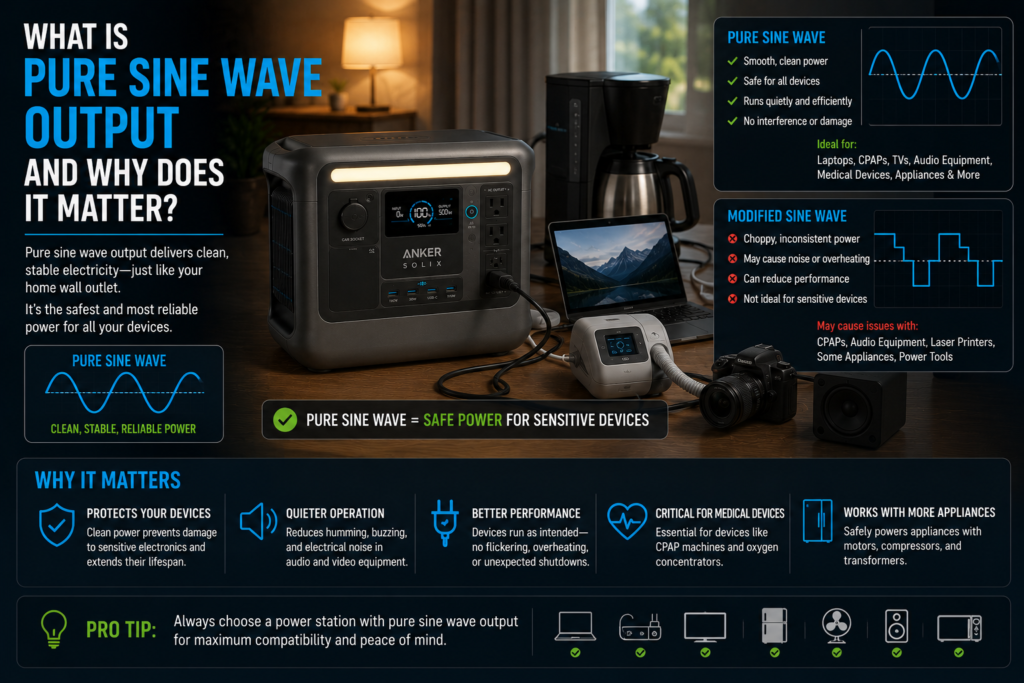
Pure sine wave output is electricity that closely matches the smooth AC power supplied by your home’s electrical outlets. It allows sensitive electronics, appliances, and motors to operate safely, quietly, and efficiently.
Unlike modified sine wave inverters, pure sine wave inverters produce clean electrical current with minimal distortion, making them the preferred choice for portable power stations, solar generators, UPS systems, and home backup power.
What Is Pure Sine Wave Output?
A pure sine wave is the smooth, continuous waveform produced by utility power companies.
When electricity flows from your wall outlet, the voltage rises and falls in a smooth curve 50 or 60 times every second, depending on your country’s electrical standard.
Portable power stations store electricity as DC (Direct Current).
To power household appliances, they use an inverter that converts DC into AC (Alternating Current).
The quality of that conversion depends on the inverter.
A pure sine wave inverter recreates the same smooth waveform found in grid electricity.
As a result, connected devices behave exactly as if they were plugged directly into a household outlet.
How Does Pure Sine Wave Output Work?
Inside a portable power station:
- The battery stores DC power.
- The inverter converts DC into AC.
- Digital control circuits precisely shape the electrical waveform.
- The inverter continuously adjusts voltage and frequency.
- Your devices receive stable household-quality electricity.
Modern premium portable power stations use advanced inverter technology to keep voltage fluctuations extremely low while maintaining stable frequency and minimal electrical noise.
This is especially important for electronics containing microprocessors.
Why Pure Sine Wave Output Matters
Many devices don’t simply need electricity.
They need clean electricity.
Poor-quality AC power can cause:
- Excess heat
- Buzzing sounds
- Motor vibration
- Reduced efficiency
- Display flickering
- Charging failures
- Audio interference
- Random shutdowns
Although many simple appliances can tolerate modified sine wave power, expensive electronics generally perform much better with pure sine wave output.
Because of this, nearly every premium portable power station today includes a pure sine wave inverter.
Devices That Benefit from Pure Sine Wave Output
Medical Equipment
Medical devices often require stable electricity.
Examples include:
- CPAP machines
- Oxygen concentrators
- Medical monitoring equipment
For users relying on emergency backup power, pure sine wave output provides additional peace of mind.
Computers and Office Equipment
Modern electronics contain sophisticated power supplies.
Examples include:
- Desktop PCs
- Gaming computers
- Laptops
- NAS servers
- Wi-Fi routers
- Monitors
- Laser printers
Many people use portable power stations as UPS systems during outages.
If that’s your goal, you may also enjoy What Does UPS Mode Mean on a Portable Power Station?
Kitchen Appliances
Many kitchen appliances use motors or electronic controls.
Examples include:
- Refrigerators
- Microwaves
- Coffee makers
- Blenders
While some appliances may technically operate on modified sine wave power, they often perform more efficiently with pure sine wave electricity.
Entertainment Systems
Clean AC power helps protect:
- OLED TVs
- Sound systems
- Gaming consoles
- Projectors
- Streaming devices
Power Tools
Many cordless battery chargers and variable-speed tools perform best when supplied with pure sine wave power.
Pure Sine Wave vs Modified Sine Wave
| Feature | Pure Sine Wave | Modified Sine Wave |
|---|---|---|
| Matches household electricity | ✅ Yes | ❌ No |
| Safe for sensitive electronics | ✅ Yes | ⚠ Sometimes |
| Quiet motor operation | ✅ Yes | ❌ Often noisy |
| Efficient appliance performance | ✅ Excellent | ⚠ Lower |
| Medical device compatibility | ✅ Recommended | ❌ Often discouraged |
| Audio interference | Very low | Higher |
| Heat generation | Minimal | Often higher |
Real-World Examples
Imagine running a refrigerator during a power outage.
With pure sine wave output:
- Compressor starts smoothly.
- Motor runs quietly.
- Lower operating temperature.
- Better efficiency.
Now imagine using modified sine wave power.
You may notice:
- Loud buzzing
- Higher motor temperatures
- Reduced efficiency
- Shorter compressor lifespan
The same applies to many electronics containing switching power supplies.
Does Every Portable Power Station Have Pure Sine Wave Output?
No.
Budget power stations may still use modified sine wave inverters.
Fortunately, nearly every premium model from major manufacturers now includes pure sine wave output.
Before buying, always verify the specifications.
If the product description only says “AC inverter” without mentioning pure sine wave, check carefully.
Why It Matters for Portable Power Stations
A portable power station is designed to replace a wall outlet.
Therefore, its inverter quality directly affects everything you plug into it.
Whether you’re:
- Camping
- Working remotely
- Powering medical equipment
- Backing up your home
- Living off-grid
Pure sine wave output ensures your devices receive safe, stable electricity.
For example, many users rely on power stations to run:
- CPAP machines overnight
- Home internet during outages
- Refrigerators
- Laptop workstations
- Televisions
- Starlink systems
These applications all benefit from high-quality AC output.
Real Customer Experiences
Looking at real-world user reports from premium portable power stations reveals why inverter quality matters.
Customers successfully powered:
- Full-size refrigerators for 7–12 hour outages
- CPAP machines overnight
- Desktop computers in UPS mode
- Starlink Mini internet systems
- High-performance laptops
- TVs and home entertainment systems
- Microwaves
- Wi-Fi routers
- Cameras and drone batteries
Some users did report increased harmonic distortion when powering certain microwave ovens—an example that even among pure sine wave inverters, overall inverter quality can vary depending on design and load characteristics.
Common Myths About Pure Sine Wave Output
Myth 1: It Makes Devices Charge Faster
False.
Charging speed depends on the charger, not the waveform.
Myth 2: Only Medical Equipment Needs It
False.
Modern electronics also benefit from cleaner electricity.
Myth 3: It Only Matters for Expensive Devices
Not entirely.
Even small appliances with motors often operate more quietly and efficiently.
Myth 4: Battery Capacity Is More Important
Battery capacity determines runtime.
Pure sine wave determines power quality.
You need both.
If you’re confused by advertised battery sizes, read What Does Usable Battery Capacity Really Mean?
How to Choose a Pure Sine Wave Portable Power Station
Look for these specifications:
Continuous Output
Choose enough continuous wattage for your appliances.
Surge Rating
Motors require extra startup power.
Check surge capability.
Battery Chemistry
LiFePO4 batteries generally provide:
- Longer lifespan
- Better thermal stability
- More charge cycles
UPS Functionality
Some models automatically switch during outages.
If uninterrupted backup is important, learn more in What Does UPS Mode Mean on a Portable Power Station?
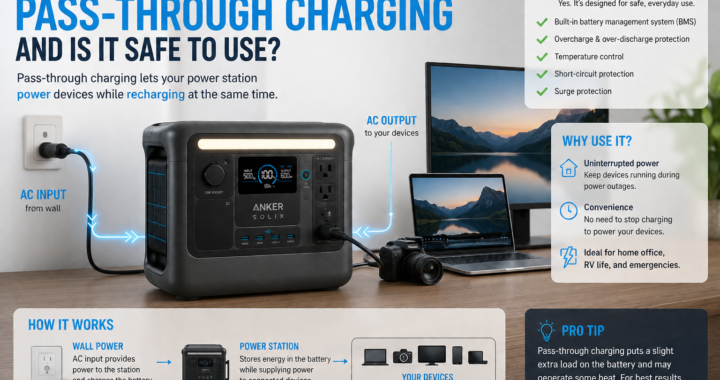
Pass-Through Charging
Many users want to charge the power station while simultaneously powering devices.
Learn how this works in What Is Pass-Through Charging on a Portable Power Station?
Best Practices
- Avoid exceeding the inverter’s rated output.
- Leave ventilation space around the unit.
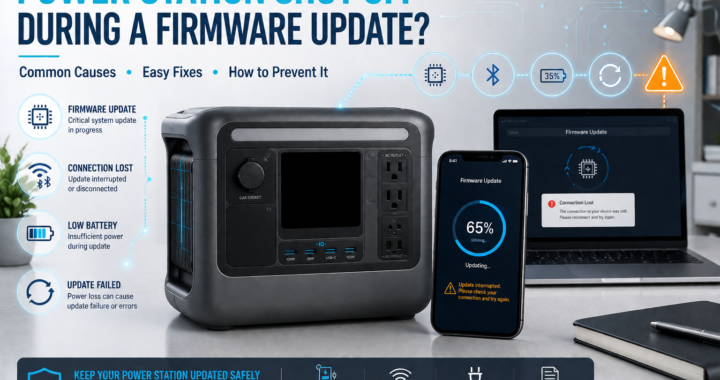
- Update firmware when recommended.
- Test important devices before relying on them during emergencies.
- Use appropriate extension cords when necessary.
- Store the battery between recommended charge levels for long-term storage.
If you’re trying to maximize runtime, don’t miss Portable Power Station Battery Drains Too Fast? 9 Ways to Make It Last Longer.
Pros and Cons of Pure Sine Wave Output
Pros
- Safe for sensitive electronics
- Quiet motor operation
- Better efficiency
- Lower operating temperatures
- Reduced electrical noise
- Compatible with almost all household appliances
- Ideal for emergency backup
Cons
- Higher manufacturing cost
- Slightly more expensive power stations
- Premium inverter designs increase overall product price
Frequently Asked Questions
What is pure sine wave output?
Pure sine wave output is AC electricity that closely matches the power supplied by household electrical outlets, making it safe for sensitive electronics and appliances.
Why does pure sine wave output matter?
It reduces electrical noise, improves efficiency, protects electronics, and allows motors and compressors to operate properly.
Do laptops require pure sine wave output?
Most modern laptop chargers work best with pure sine wave power, especially premium models with active power factor correction.
Can a refrigerator run on pure sine wave output?
Yes. In fact, refrigerators generally perform more efficiently and quietly when powered by pure sine wave electricity.
Is pure sine wave better for CPAP machines?
Yes. Many CPAP manufacturers recommend pure sine wave power for reliable operation during outages.
Does pure sine wave increase battery runtime?
No.
Battery runtime depends on battery capacity, inverter efficiency, and device power consumption—not the waveform itself.
Should I buy a portable power station with pure sine wave output?
If you plan to power electronics, appliances, medical equipment, or household devices, yes. The added reliability and compatibility are worth the investment.
Final Verdict
Pure sine wave output is one of the most important features to look for when buying a portable power station. It delivers clean, stable electricity that closely matches your home’s AC power, helping protect sensitive electronics, improve appliance efficiency, and ensure reliable operation during outages.
Whether you’re powering a CPAP machine, refrigerator, laptop, Wi-Fi router, or entertainment system, a pure sine wave inverter provides greater compatibility and peace of mind than modified sine wave alternatives.
When comparing models, don’t focus only on battery capacity or charging speed. Evaluate the inverter quality, continuous power rating, surge capability, UPS functionality, and battery chemistry together. For a real-world example of how these features come together in a modern power station, see Anker SOLIX C1000 Gen 2 Review: Is It Worth Buying in 2026?